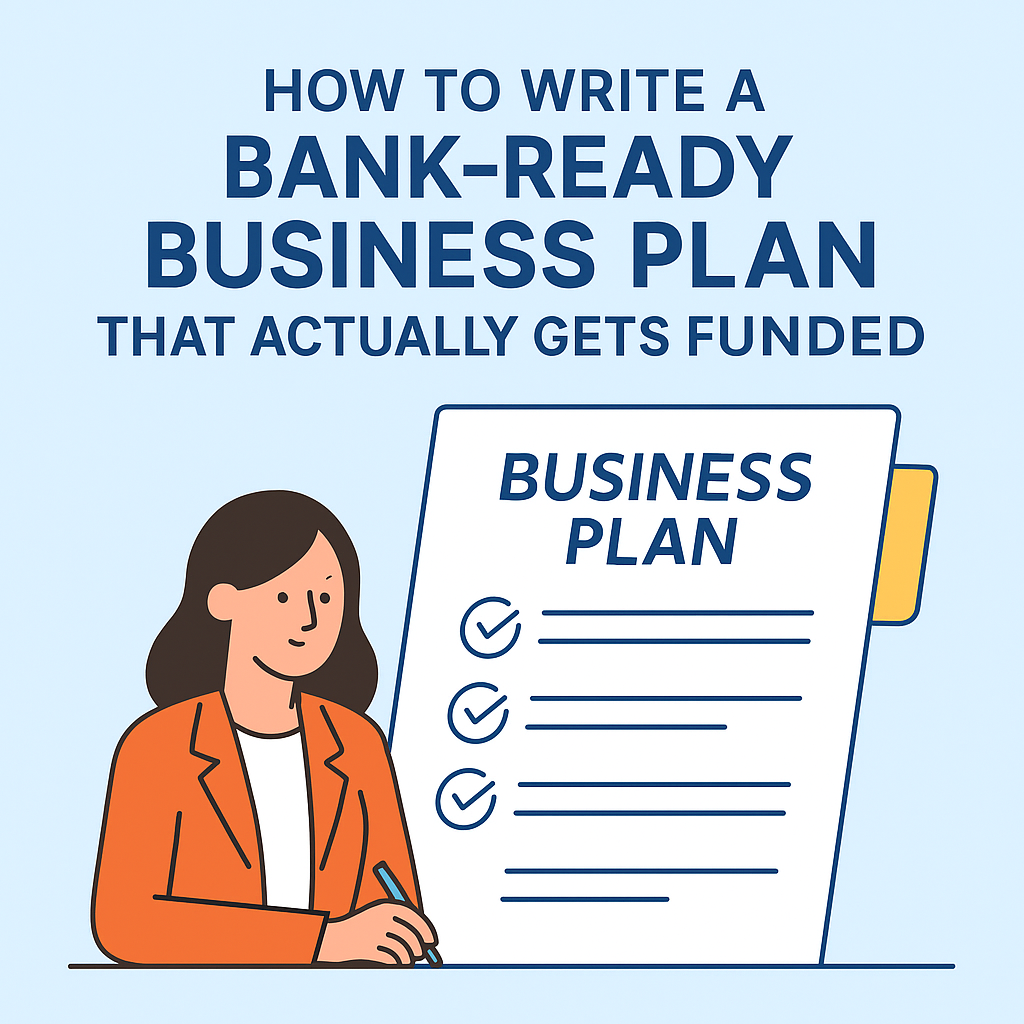
How to Write a Bank‑Ready Business Plan That Actually Gets Funded

Securing financing is one of the biggest hurdles small business owners face—and a strong business plan is often the deciding factor between approval and rejection. Banks don’t just want a vision; they want proof that your business is viable, profitable, and capable of repaying the loan.

Below is a practical, lender‑focused guide to crafting a business plan that gives you the best shot at getting funded.


1. Executive Summary (Your First Impression Matters)

Think of your executive summary as the “elevator pitch” for your entire plan. Lenders read this section first—and often decide right away whether the rest is worth their time.

A strong executive summary should:

  • Clearly state what your business does
  • Identify your target market
  • Explain why you’ll succeed
  • Highlight how much money you’re requesting and what it will be used for

Pro tip: Write this section last. It’s easier once you’ve completed the rest of the plan.


2. Company Description (Tell Your Business Story)

Lenders want context—who you are, what you do, and why your business exists.

Include:

  • Business history (if applicable)
  • Mission and core values
  • Legal structure
  • Location and service area
  • Your unique value proposition

3. Market Analysis (Show You Understand Your Industry)

Banks approve businesses that understand their customers and competitors. A thorough market analysis builds confidence.

Cover:

  • Industry size & growth trends
  • Your ideal customer profile
  • Competitor strengths/weaknesses
  • Your price position in the market
  • Market demand and barriers to entry

Back up every claim with real data whenever possible.


4. Business Model & Operations Plan (Prove You Can Execute)

This section outlines how your business operates day‑to‑day.

Include:

  • How your product or service is delivered
  • Suppliers and partners
  • Staffing plan
  • Operational workflow
  • Technology and systems

Banks want to see structure and scalability.


5. Marketing & Sales Strategy (Show How You’ll Get Customers)

Explain:

  • Your marketing channels
  • Lead generation strategy
  • Sales process
  • Customer retention plan
  • Pricing strategy

This demonstrates how you’ll generate revenue—and keep it coming.


6. Management Team (Highlight Expertise & Credibility)

A strong team reduces lender risk.

Include:

  • Owner and key team member bios
  • Relevant experience
  • Organizational chart
  • Advisory support (if applicable)

7. Financial Projections (The Section Banks Focus On Most)

Provide:

  • 2–3 years of projected income
  • Cash‑flow forecasts
  • Balance sheet estimates
  • Break‑even analysis
  • A clear repayment plan

Keep projections realistic—not overly optimistic.


8. Funding Request (Be Clear and Specific)

Spell out exactly:

  • How much money you’re requesting
  • What each dollar will be used for
  • How the funding moves the business forward

Lenders appreciate clarity and specificity.


9. Supporting Documents (Reinforce Credibility)

Add items such as:

  • Bank statements
  • Tax returns
  • Permits
  • Contracts or leases
  • Resumes
  • Product images or mockups

Your goal is to eliminate uncertainty before it arises.


Final Thoughts

A bank‑ready business plan doesn’t just help you secure financing—it becomes a roadmap for growth. Done right, it shows lenders that you have clarity, discipline, and a real strategy for success.

If your business needs help, contact us at
👉 https://commresinc.com
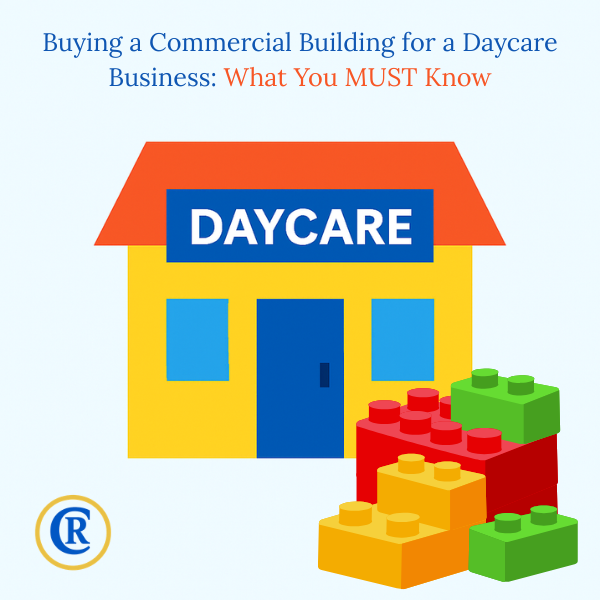
Buying a Commercial Building for a Daycare Business: What You MUST Know

Buying a commercial building for your daycare is a major step — one that gives you long‑term stability, control over your environment, and the ability to build real equity. But child‑care facilities are among the most regulated commercial spaces, which means choosing the wrong building can lead to expensive renovations, delays, and even the inability to get licensed.

Here’s everything daycare owners need to know before investing in a commercial property.


🏫 1. Understand Licensing Requirements First

Before you tour a single building, understand your state’s regulations. These rules affect what kind of property you can buy — and how much you’ll spend renovating it.

Common requirements include:

  • Minimum square footage per child
  • Fire safety and sprinkler systems
  • Multiple exits from classrooms
  • Diapering stations separate from food prep areas
  • Sinks inside or near classrooms
  • Age‑appropriate restroom access
  • Fenced outdoor play space

If a building cannot be brought up to code affordably, walk away early.


📍 2. Check Zoning Laws Before Anything Else

Many new daycare owners discover too late that their building isn’t zoned for child care.

Look for zoning categories that allow:

  • Daycare
  • School
  • Educational or Institutional uses

If not, you may need a special-use permit, which can take months and doesn’t always get approved.


🏢 3. Pick the Right Type of Commercial Building

Some property types are easier (and cheaper) to convert into a daycare:

Freestanding buildings

⭐ Best option

  • Easier to fence outdoor space
  • No shared walls or complaints from neighbors
  • More flexibility for layout

Strip mall units

👍 Possible, but check:

  • Safe drop‑off area
  • Ability to build fenced play space
  • Neighboring tenants (avoid smoke shops, bars, salons)

Office buildings

⚠ Often cheap, but:

  • Usually require major plumbing work
  • Limited outdoor space
  • Interior hallways may restrict child flow and emergency exits

🛠️ 4. Estimate Renovation Costs Early

Daycare build-outs usually cost $80–$200 per square foot, depending on:

  • Number of sinks and plumbing lines
  • Upgrading fire systems
  • Flooring that meets child safety standards
  • ADA-compliant bathrooms
  • Kitchen or food‑prep upgrades
  • Playground installation

If you’re buying an already-licensed daycare building, you can save tens of thousands of dollars.


🧮 5. Know How Much Capacity the Building Can Support

Your building determines your enrollment — and therefore your revenue.

Capacity is based on:

  • Usable square footage
  • Number of bathrooms
  • Proper age-group separation
  • Classroom counts
  • Playground capacity

If you need 80 kids to profit but the building only supports 50, the math won’t work.


🛝 6. Check for a Safe, Usable Outdoor Play Area

Most states require outdoor play space. Look for:

  • At least 75–100 sq ft per child using the playground at once
  • Ability to fence the area
  • Separation for toddlers vs preschoolers
  • Direct access from classrooms (ideal)

If there is no outdoor space, confirm whether your state allows off-site playgrounds. Many do not.


🚗 7. Parking and Drop-Off Flow Matter More Than You Think

Cities and licensing agencies heavily evaluate safety during drop-off and pick-up.

Look for:

  • Safe loading zone
  • No backing into busy traffic
  • Adequate parent parking
  • Clearly marked entrances

Bad traffic flow is one of the fastest ways to lose families.


📋 8. Schedule These Inspections Before You Close

Choose inspectors who understand school or childcare codes.

Important inspections:

  • Fire marshal evaluation
  • Structural inspection
  • HVAC capacity
  • Roof and plumbing
  • Lead and asbestos (especially older buildings)
  • ADA compliance review

You should also ask contractors:
“Would this building pass daycare licensing?”


💰 9. Explore Your Financing Options

Common loan options include:

SBA 504 Loan

  • Low down payment
  • Great for commercial real estate
  • Long fixed rate

SBA 7(a)

  • Covers renovations + purchase
  • More flexibility

Traditional loans

  • Higher down payment
  • Stricter requirements

🚫 10. Red Flags — Walk Away If You See These

  • No outdoor play space
  • Poor parking or unsafe drop-off
  • Residential-only zoning
  • Too many interior load-bearing walls (limits layout)
  • Ceiling height too low
  • Neighbors complaining about noise
  • No space for plumbing additions (common in offices)

Buying a building “cheap” can become very expensive.


🌟 Final Thoughts

Buying a commercial building for your daycare is one of the smartest long‑term investments you can make — but only if you choose a space that supports licensing, safety, and growth. Taking the time to evaluate zoning, layout, renovation costs, and inspections will save you money and frustration later.

The 5 C’s of Credit Explained for Small Business Owners

When applying for any type of business financing—whether it’s an SBA loan, equipment loan, line of credit, or alternative funding—lenders rely on a foundational framework known as the 5 C’s of Credit. This system helps lenders evaluate your risk level and determine whether your business is a strong candidate for funding.

Understanding these five factors can significantly increase your chances of approval and help you prepare stronger, more compelling loan applications.


1. Character: Your Business Reputation & Reliability

Character is how lenders assess your trustworthiness. They want to know whether you consistently meet your financial obligations and operate your business responsibly.

Lenders typically review:

  • Personal and business credit history
  • Payment history with vendors or suppliers
  • Length of time in business
  • Public records (liens, judgments, bankruptcies)
  • Professional background of ownership

How to improve this C:

  • Pay bills early or on time
  • Resolve any outstanding negative marks
  • Build positive vendor credit (Net‑30 accounts, etc.)
  • Maintain clean and complete business records

2. Capacity: Your Ability to Repay the Loan

Capacity evaluates your business’s cash flow and profitability—basically, whether your business can afford the payments.

Lenders look at:

  • Revenue trends
  • Profit margins
  • Debt‑to‑income (DTI) or debt‑service‑coverage ratio (DSCR)
  • Existing financial obligations
  • Consistency of cash flow

How to improve this C:

  • Increase recurring revenue
  • Reduce unnecessary expenses
  • Separate personal and business finances
  • Maintain up‑to‑date financial statements

3. Capital: Your Investment in the Business

Lenders want to see that you have “skin in the game.” Capital refers to how much you’ve invested into your business and your financial strength as an owner.

This includes:

  • Personal funds invested
  • Business assets
  • Retained earnings
  • Savings or reserves
  • Tangible net worth

Why it matters: Businesses with more capital at stake are viewed as lower‑risk because owners are more likely to protect their investments.


4. Collateral: Assets That Secure the Loan

Collateral reduces the lender’s risk by giving them a claim on an asset if the loan goes unpaid.

Collateral can include:

  • Real estate
  • Equipment
  • Inventory
  • Vehicles
  • Accounts receivable
  • Business assets

Not all loans require collateral—SBA loans often allow alternative forms or partial collateral—but offering strong collateral can significantly increase approval odds.


5. Conditions: The Purpose of the Loan & Market Factors

Conditions refer to both:

✔ The specific conditions of your loan

– How much you’re requesting
– How you plan to use the funds
– Anticipated ROI

✔ External economic conditions

– Industry trends
– Local market stability
– Interest rate environment
– Regulatory changes

Lenders want to ensure your funding request is logical, strategic, and beneficial to your business’s long‑term success.


Why the 5 C’s Matter

Mastering the 5 C’s can dramatically improve your ability to:

  • Get approved for larger loan amounts
  • Qualify for lower interest rates
  • Access SBA or bank‑level financing
  • Build long‑term financial stability

Even if you don’t qualify today, focusing on these five areas can put your business in the strongest possible position for future funding opportunities.

Why Smart Financing Is the Key to Small Business Growth in 2026

In today’s rapidly shifting economy, small businesses face more pressure than ever to stay competitive, maintain healthy cash flow, and capitalize on new opportunities. Yet despite strong entrepreneurial energy, access to capital remains one of the biggest challenges—and one of the most important success factors.

For small businesses, strategic financing isn’t just helpful; it’s transformational. Recent data reveals exactly why securing the right funding partner can make the difference between growth and stagnation.


The Demand for Small Business Funding Is Surging

Small business funding demand in 2025–2026 hit record levels, driven both by rising operating expenses and new expansion opportunities. According to Cardiff’s 2025 U.S. Small Business Funding Report:

  • 56% of small businesses seek capital for operating expenses, reflecting ongoing cost pressures.
  • 46% seek funding for growth and expansion, showing strong entrepreneurial ambition.
  • At the same time, traditional banks have tightened credit standards for 13 consecutive quarters, widening the “access‑to‑capital gap.”

This growing gap is pushing many businesses to seek more flexible non‑bank financing options—exactly where companies like Commercial Resources, Inc. provide critical solutions.


Businesses That Use Financing Grow Faster

New findings from the 2025 Intuit QuickBooks Small Business Financing Report show a striking trend:

  • Small businesses using business financing are nearly 2× more likely to be in an active growth phase versus those using personal funds.
  • Business financing is strongly linked to healthier cash flow and higher profitability.
  • 65% of small businesses plan to invest in the next 3 months, prioritizing marketing, new technology/AI, and equipment—all areas where financing helps accelerate progress. [quickbooks…intuit.com]

For many entrepreneurs, the difference isn’t desire—it’s access to smart, structured capital.


Fintech and Alternative Lending Are Rising Fast

With traditional lenders becoming harder to rely on, small businesses are turning to more modern funding solutions:

  • Applications to large banks dropped from 44% to 39%, while 72% of businesses now go directly to online/fintech lenders.
  • Fintech lenders are filling the gap by offering faster approvals, more flexible underwriting, and innovative AI‑driven financing models.
  • AI adoption in small business lending is surging, with nearly 60% of SMBs using AI, boosting financial decision‑making and underwriting accuracy.

This shift underscores the importance of lenders like Commercial Resources—fast, flexible, and built around real‑world needs.


The Economy Is Influencing Financing Decisions

The macroeconomic climate plays a major role in how business owners plan their next steps:

  • 68% of business owners say economic conditions significantly impact their financing decisions.
  • Only 38% expect revenue growth over the next year—down from 70%—making financing a vital tool for weathering uncertainty.
  • Still, business owners are leaning into smarter, tech‑enabled growth, with 69% using or planning to use AI to support scaling efforts.

In this environment, reliable capital isn’t optional—it’s essential.


Small Businesses Face Real Barriers—But the Right Partner Solves Them

According to the U.S. Treasury’s 2025 Small Business Financing Landscape Report:

  • Many small businesses struggle comparing financial products with varying terms, fees, and repayment structures.
  • Fintech and nontraditional funding sources play an increasingly important role—especially for underserved entrepreneurs and those needing flexible financing options.

Commercial Resources, Inc. simplifies this process—offering clarity, support, and customized financing programs that help owners make confident decisions.


Why Small Business Financing Is Worth the Investment

Based on current market conditions and data, here’s why businesses benefit from taking advantage of financing now:

1. Fueling Growth

Financing allows companies to expand operations, hire staff, purchase equipment, enter new markets, and increase marketing. Businesses using financing grow faster and more sustainably. 2. Stabilizing Cash Flow

Even profitable businesses face cash‑flow gaps. Financing helps navigate slow seasons, rising operating costs, and unexpected expenses.

3. Increasing Agility

With economic conditions shifting, flexibility is vital. Modern financing options—including revolving lines of credit and AI‑supported underwriting—help businesses respond quickly to new opportunities.

4. Reducing Personal Financial Risk

Small businesses relying on personal credit cards or savings expose owners to unnecessary stress and risk. Dedicated business financing protects personal assets.


Final Thoughts: Business Success Starts with Smarter Funding

Small business owners are ambitious, resilient, and innovative—but no business grows on passion alone. The data is clear:

✔ Funding demand is at record highs
✔ Businesses using financing grow faster and stay healthier
✔ Fintech lenders are opening doors traditional banks are closing
✔ Economic uncertainty makes access to capital more important than ever

Commercial Resources, Inc. is built to help small businesses navigate today’s complex financial landscape with confidence—by providing accessible, flexible, and strategic funding solutions.

Starting and Growing a Successful Day Care Business

The day care industry has become one of the most essential pillars of modern communities. As more households rely on dual incomes and flexible work arrangements, the demand for high‑quality, reliable, and affordable childcare continues to rise. For entrepreneurs, opening a day care business offers not only strong market potential but also an opportunity to make a lasting impact on families and the broader community.


1. Understanding the Market Need

Childcare is a resilient industry. Regardless of broader economic shifts, parents need safe environments where their children can learn, socialize, and thrive. The strongest demand tends to come from:

  • Working parents seeking full‑day care
  • Parents with infants and toddlers, who require lower adult‑to-child ratios
  • Families with non‑traditional work schedules, creating opportunities for extended‑hour care
  • Companies looking to provide childcare support as a workplace benefit

Entrepreneurs who understand the unique needs of their local area can better position their day care to stand out.


2. Choosing Your Day Care Model

There are generally three main formats:

A. Home-Based Day Care

  • Lower startup costs
  • Flexible and family‑friendly
  • Limited number of children allowed (varies by state)
  • Warm, home‑like environment

B. Center-Based Day Care

  • Higher capacity and revenue potential
  • More staff, more structure
  • Suitable for educational programs and specialized curriculums

C. Employer-Sponsored or On-Site Corporate Day Care

  • Backed by partnerships with companies
  • Stable enrollment
  • Strong long-term opportunities

Each model requires different levels of licensing, equipment, staffing, and financial investment.


3. Licensing and Regulations

Day care is a highly regulated industry for good reason—children’s safety and development depend on it. While specifics differ by state, most licensing standards involve:

  • Background checks and child‑safety training
  • Safety‑inspected physical spaces
  • Defined adult‑to‑child ratios
  • CPR and first‑aid certifications
  • Curriculum requirements for early education
  • Regular inspections

The licensing process can take several months, so planning ahead is essential.


4. Building Your Curriculum and Environment

Modern day care programs go beyond babysitting. Parents want developmental value. A strong program includes:

  • Structured daily routines
  • Age‑appropriate learning activities (STEM exposure, language development, creative arts)
  • Social‑emotional skill building
  • Outdoor play and physical activity
  • Nutritious meal and snack programs

A well-designed curriculum helps differentiate your center from others in the area.


5. Hiring and Training Staff

Your staff is your most important asset. Successful day care businesses prioritize:

  • Teachers with early childhood education experience
  • Ongoing professional development
  • Strong communication with parents
  • A culture of patience, positivity, and safety

Low staff turnover is a major competitive advantage in childcare.


6. Financial Planning and Profitability

Start‑up costs vary significantly between home‑based care and full-scale centers. Typical expenses include:

  • Facility rental or renovation
  • Insurance and licensing fees
  • Equipment: toys, furniture, safety items
  • Staff salaries and benefits
  • Learning materials
  • Marketing and administrative software

Though labor‑intensive, day care businesses can achieve healthy margins with efficient staffing, high enrollment rates, and strong community reputation.


7. Marketing and Enrollment Growth

Word‑of‑mouth remains the strongest driver of new clients, but successful day cares also invest in:

  • A professional website with clear curriculum information
  • Google Maps and local directory listings
  • Social media presence
  • Parent testimonials
  • Community partnerships with schools and businesses
  • Open‑house events and tours

Clear communication and transparency build long‑term trust.


8. Trends Shaping the Future of Childcare

The industry continues to evolve with new opportunities emerging in:

  • STEM‑focused early learning
  • Flexible drop‑in childcare
  • Employer‑subsidized childcare programs
  • Nature‑based learning centers
  • Technology for parent updates (daily photos, developmental reports)

Centers that adapt to modern needs will gain a competitive edge in their markets.


Conclusion

Starting a day care business is both meaningful and profitable. It requires patience, planning, and dedication, but for those passionate about early childhood development, it offers a deeply rewarding path. By combining strong operational systems with a warm, enriching environment for children, entrepreneurs can build a childcare program that becomes a trusted part of community life.

Small Business Financing in 2026: What Commercial Clients Need to Know Before Securing Capital

For many businesses, securing capital isn’t just about growth — it’s about survival, stability, and staying competitive in a marketplace transformed by technology and rising costs. In 2026, small business financing has become more flexible, more data‑driven, and more specialized, offering companies a wider variety of tools to fund their operations, equipment needs, and expansion plans. However, this new landscape also demands that business owners make smarter, more strategic funding choices.

This guide breaks down the most important financing trends and tools shaping the market today — and what they mean for Commercial Resources’ clients who rely on smart, accessible capital solutions.


1. Today’s Lending Environment Is Faster, Smarter, and Data‑Driven

Traditional lending models have shifted dramatically. Instead of relying mainly on credit scores and historical tax returns, many lenders now use real‑time financial data pulled directly from accounting and commerce platforms to assess risk. Systems such as QuickBooks, Stripe, Amazon, and Shopify now feed lenders live cash‑flow intelligence.

At the same time, interest rates remain higher than pre‑pandemic levels, and lenders — both traditional banks and fintech companies — expect businesses to provide clear financials and repayment plans before approving applications.

What this means for Commercial Resources clients:
Your real‑time financial health matters more than ever. Clean books, accurate statements, and steady revenue data help you secure better rates and faster approvals.

2. Smaller, Purpose‑Driven Loans Are Becoming the Norm

One of the most notable trends moving into 2026 is the shift toward smaller, targeted financing products. Instead of large, broad‑use loans, businesses now secure capital for highly specific purposes — such as equipment upgrades, inventory cycles, marketing pushes, or short‑term working capital needs.

Lenders favor these smaller, project‑based loans because they carry less risk and have clearer return pathways.

What this means for Commercial Resources clients:
A well‑defined purpose for your funding request — such as equipment replacement or facility upgrades — dramatically increases approval odds.

3. Revenue‑Based Financing Is Expanding, Especially for Online Sellers

Revenue‑based financing (RBF) continues to gain traction, especially among eCommerce and digital‑first businesses. With RBF, repayment is tied to a percentage of future revenue — meaning payments flex as sales fluctuate.

Platforms like Onramp Funds provide fast access to capital (sometimes within 24 hours) by integrating directly with online sales platforms.

What this means for Commercial Resources clients:
If your business has cyclical or seasonal revenue, RBF may offer the flexibility you need without the pressure of fixed monthly payments.


4. Traditional Loans Still Matter — but Preparation Is Essential

Despite new alternatives, conventional business loans remain a cornerstone of commercial financing. They often offer lower long‑term costs, predictable amortization, and access to higher dollar amounts. However, lenders now expect:

  • clean, accurate financial statements
  • clear cash‑flow projections
  • a defined use of funds
  • proof of repayment capacity

Loan approvals are increasingly based on real‑time operational health rather than long‑term credit history alone.

What this means for Commercial Resources clients:
Well‑prepared documentation and clearly defined needs help secure better, more stable financing terms.


5. Grants and Tax Incentives Offer Often‑Overlooked Opportunities

Every year, small businesses miss out on valuable grants and tax credits simply because they aren’t aware they exist.

For example:

Notable Grants (Public + Private)

Grants from American Express, QuickBooks, DoorDash, and other national programs support a range of industries

Powerful Federal Tax Credits

  • Section 179 Deduction: write off up to $1.22 million on equipment and software purchases in 2026
  • R&D Tax Credit: offsets 6–14% of qualified R&D expenditures, even for non‑tech businesses [esplawyers.com]

What this means for Commercial Resources clients:
If you’re acquiring equipment or improving products/processes, leveraging tax incentives can dramatically reduce out‑of‑pocket spending.


6. Relief Programs Still Provide Critical Support

Many businesses still qualify for federal, state, and private relief programs — including grants, credits, subsidized loans, and sector‑specific assistance. Many owners incorrectly assume they won’t qualify, leaving thousands of dollars unused.

What this means for Commercial Resources clients:
It’s worth reviewing relief programs annually — many are industry‑specific and underutilized.


7. Strategic Financing Helps You Grow Without Draining Cash

A common mistake business owners make is using their operating cash to fund expansions — weakening payroll stability, inventory budgets, and emergency reserves.

Instead, experienced businesses separate:

  • operating capital (day‑to‑day expenses)
  • expansion financing (growth investments)

Strategic financing enables growth while protecting liquidity.

What this means for Commercial Resources clients:
Financing should fuel expansion — not jeopardize your operational cash flow.


8. Preparing for Financing in 2026

To get the best rates and widest range of options, businesses should be prepared with:

  • updated financial statements
  • clean, reliable bookkeeping
  • consistent revenue records
  • a clear explanation of how funds will be used
  • organized digital financial data for lenders who integrate with accounting platforms

With fintech lenders increasingly using real‑time data to evaluate your business, clean financial systems have become essential.


Final Thoughts

Small business financing in 2026 is more dynamic, more flexible, and more technologically advanced than ever before. Whether you need capital for equipment, expansion, staffing, or cash‑flow stabilization, today’s market offers more options than at any point in history.

But choosing the right financing tool requires clarity, preparation, and strategy.

Commercial Resources is here to help your business navigate this evolving landscape, secure the capital you need, and grow without compromising your operational stability.

🇺🇸 SBA’s 2026 Policy Shift: How New Rules Affect Green Card Holders

🧾 What the SBA Changed

1. 100% of Business Owners Must Be U.S. Citizens or U.S. Nationals

Beginning March 1, all direct and indirect owners of any small business applying for SBA‑backed loans must be U.S. citizens or U.S. nationals, with no exceptions.
[politico.com], [cbsnews.com], [economicti…atimes.com]

This applies to all major SBA loan programs, including:

2. Green Card Holders Are No Longer Eligible

Under the new rule, green card holders cannot own even 1% of a business applying for an SBA loan.
[politico.com], [economicti…atimes.com], [news.bloom…erglaw.com]

This reverses a December 2025 rule that allowed:

3. SBA Rescinds Previous Guidance Allowing Partial Non‑Citizen Ownership

The new policy formally rescinds Procedural Notice 5000‑872050, replacing it with revised guidance under SOP 50 10 8.
[economicti…atimes.com], [sba.gov]


🗓️ Key Effective Dates & Deadline

Effective Date: March 1, 2026

Businesses with any green card holders in their ownership structure will lose eligibility starting on this date.
[visaverge.com]

Transition Rule

If a business with an LPR owner receives an SBA loan number before March 1, it may still qualify under the old rules.
[visaverge.com]

This has created a rush among lenders and applicants to submit paperwork before the cutoff.


🧭 Why the SBA Implemented the New Rules

The SBA cites compliance with Executive Order 14159, titled “Protecting the American People Against Invasion.”
[economicti…atimes.com]

The rule aligns with the Trump administration’s broader immigration and benefit‑restriction agenda, which has included:

  • Citizenship verification requirements on loan applications
  • Restrictions on non‑citizens receiving federal benefits
  • Relocating SBA regional offices from “sanctuary cities”
    [news.bloom…erglaw.com]

SBA officials argue the policy ensures taxpayer‑funded loan guarantees benefit:


⚠️ Impact on Immigrant Entrepreneurs

A major disruption to green‑card‑holder business ownership

Green card holders:

  • Can no longer own any stake in an SBA‑financed borrower
  • Cannot participate even as minority owners through indirect ownership layers
    [visaverge.com]

Economic Consequences

In some regions, up to 10% of existing SBA loan portfolios are now immediately ineligible under the new rules.
[economicti…atimes.com]

Immigrant advocates warn the policy:

  • Jeopardizes immigrant‑owned business creation
  • Eliminates access to mainstream capital
  • Undermines a demographic that starts businesses at twice the rate of U.S.-born residents
    [cbsnews.com]

Political Response

Lawmakers and advocacy groups reacted sharply:

  • Rep. Velázquez and Sen. Markey condemned the policy as anti‑immigrant and discriminatory.
    [politico.com]
  • Advocacy networks argue the SBA is abandoning its mission to support all small business growth.
    [cbsnews.com]

💼 What Affected Business Owners Must Do Now

1. Finalize loans before March 1 (if eligible under old rules)

Loans must receive their SBA loan number before the deadline.
[visaverge.com]

2. Consider restructuring ownership

Some businesses may:

  • Transfer LPR ownership to citizen partners
  • Create compliant structures to maintain funding eligibility
    However, even indirect Green Card ownership disqualifies a business, limiting restructuring options.
    [visaverge.com]

3. Consider alternative financing sources

Since SBA‑backed loans may no longer be accessible, alternatives include:

  • Community banks and credit unions
  • Private lenders
  • CDFIs
  • Non‑SBA microloans

📌 Conclusion

The SBA’s 2026 citizenship mandate marks a historic and controversial shift in federal small‑business lending. For the first time, lawful permanent residents—despite living, working, and paying taxes in the U.S.—are completely excluded from SBA‑backed loan programs.

The change affects thousands of immigrant entrepreneurs and alters the small‑business landscape nationwide. As the March 1 deadline approaches, businesses must quickly review ownership structures, explore alternative financing, or race to qualify under the prior rules.

Challenges Business Owners Face When Needing Financing

Securing financing is one of the most critical steps in building, growing, or sustaining a business. Yet, for many business owners, accessing the right funding at the right time feels overwhelmingly complex. Whether you’re seeking capital for expansion, equipment, payroll, or cash‑flow stabilization, the challenges are often universal. Understanding these hurdles can help business owners better prepare — and choose partners like Commercial Resources who simplify the process.


1. Strict Lending Requirements

Traditional lenders often require strong credit histories, substantial collateral, and detailed financial records. Even profitable businesses may struggle to meet every requirement, particularly newer companies or those in industries considered “higher risk.”

Common lender expectations include:

  • High personal and business credit scores
  • Multi-year financial statements
  • Significant collateral
  • A lengthy operating history

Businesses that fall short are often denied, even if they show strong potential.


2. Cash Flow Limitations

Cash flow is one of the biggest indicators lenders examine. Seasonal businesses, companies with slow-paying customers, or businesses experiencing rapid growth often face cash flow gaps — creating red flags for lenders.

Even temporary dips can impact:

  • Loan approval
  • Loan size
  • Interest rates offered

This creates a catch‑22: businesses need financing to stabilize cash flow, but they need strong cash flow to get financing.


3. Limited Awareness of Funding Options

Many business owners only consider traditional bank loans, not realizing there are alternative, flexible financing solutions that may better fit their needs.

Examples include:

  • Equipment financing
  • Working capital advances
  • Invoice factoring
  • Merchant cash advances
  • Asset‑based lending
  • Lines of credit designed for businesses with fluctuating revenue

Without understanding these options, owners may delay financing, accept unfavorable terms, or assume they won’t qualify at all.


4. Time Constraints and Slow Approvals

Running a business leaves little time for lengthy paperwork and repeated lender requests. Traditional financing can take weeks or even months to process.

This is especially challenging when funding is needed for:

  • Immediate operational costs
  • Sudden equipment failure
  • Seasonal inventory demands
  • Growth opportunities with short windows

When time is money, slow approvals can cost more than the financing itself.


5. Difficulty Preparing Documentation

Lenders often require:

  • Tax returns
  • Profit & loss statements
  • Bank statements
  • Debt schedules
  • Accounts receivable aging reports
  • Business plans

Many business owners simply don’t have these documents readily organized, especially those without dedicated financial staff. Preparing them can cause stressful delays.


6. High Interest Rates or Unfavorable Terms

Even when financing is approved, terms may not be ideal. Some owners face:

  • Higher‑than‑expected rates
  • Short repayment periods
  • Large upfront fees
  • Personal guarantees
  • Daily or weekly repayment schedules

These terms may solve a short-term need but strain long-term operations if not carefully evaluated.


7. Impact of Economic Conditions

Economic uncertainty — rising interest rates, supply chain issues, inflation, or sector-specific downturns — can tighten lending environments. Even well-established businesses may face reduced borrowing capacity simply due to market shifts outside their control.


How Commercial Resources Helps

Commercial Resources understands these challenges and works to eliminate friction in the financing process. By connecting businesses with flexible funding solutions tailored to their industry, revenue model, and timing needs, Commercial Resources ensures owners receive realistic options without unnecessary barriers.

Whether you need fast working capital, equipment financing, or a customized lending solution, the team is dedicated to simplifying every step.

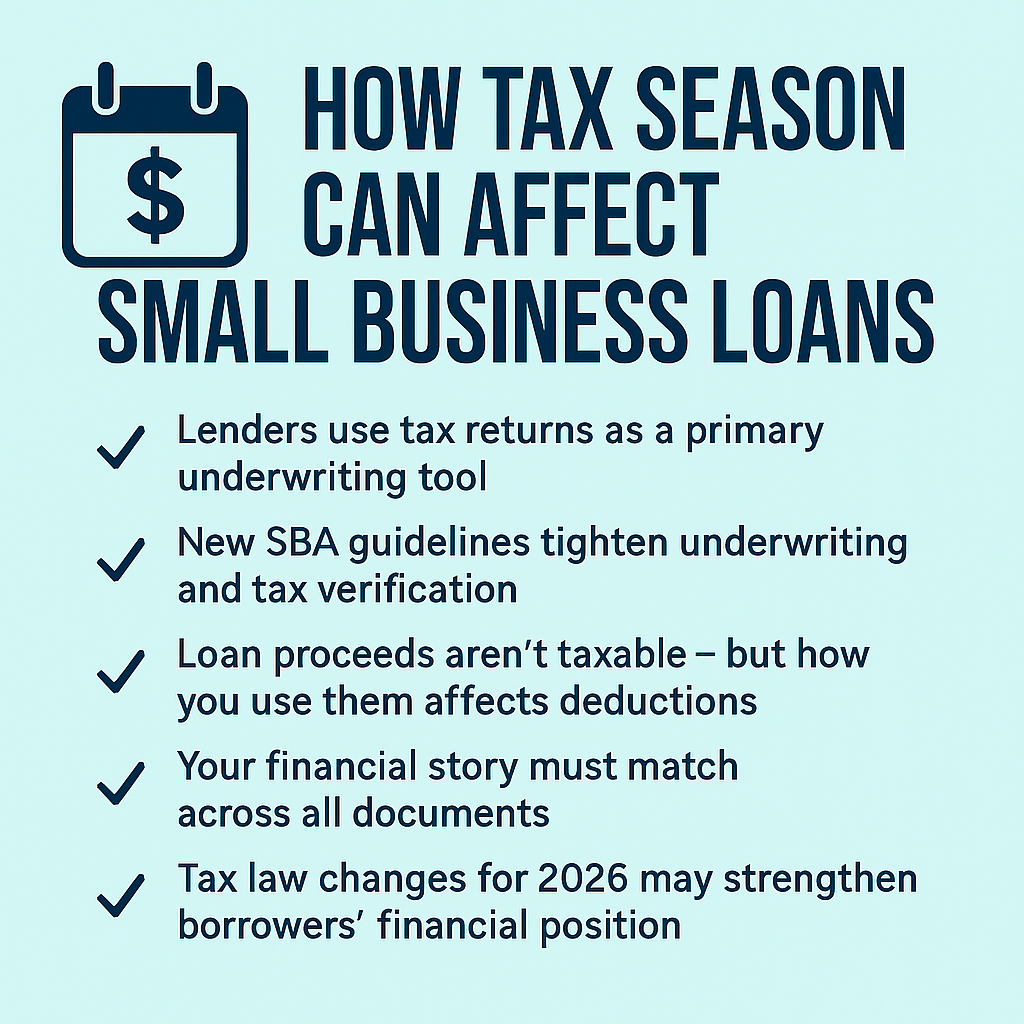
How Tax Season Can Affect Your Ability to Get a Small Business Loan (and What Smart Borrowers Should Do About It)

Tax season isn’t just about preparing returns — it can directly impact your ability to secure financing, buy a business, or purchase commercial property. Whether you’re seeking an SBA loan, bank financing, or alternative funding, the accuracy and strength of your tax documentation play a major role in how lenders evaluate your business.

Below is a practical, lender-focused guide on how tax season affects financing approvals — and what business owners and commercial buyers can do to improve their chances.


1. Lenders Use Your Tax Returns as a Primary Underwriting Tool

When underwriting a loan, lenders rely heavily on business and personal tax returns to confirm financial stability, verify income, and reconcile cash flow. Business tax returns (usually the last 2–3 years) are used to validate earnings, examine deductions, and confirm tax compliance. Underwriters compare these tax returns with financial statements and bank activity, checking for consistency, unusual items, and signs of risk. Personal tax returns are also reviewed for owners of small businesses, particularly sole proprietors and LLCs, since personal income is closely tied to business operations. [finhelp.io]

If required returns are missing or incomplete, the business is not eligible for SBA financing until those documents are filed and verified. Lenders must obtain IRS tax transcripts and match them against the financial information submitted during underwriting, making accurate filings essential. [starfieldsmith.com]


2. New SBA Guidelines Tighten Underwriting and Tax Verification

Recent updates to SBA lending rules have restored more rigorous underwriting standards for both 7(a) and 504 loans. As of June 1, 2025, lenders must follow updated Standard Operating Procedures that include tax transcript verification, stricter eligibility rules, and more responsibility placed on lenders to confirm the accuracy and reliability of financial information. These updates reverse relaxed rules from recent years and reinforce compliance requirements during tax season. [congress.gov]

In addition, lenders must reinstate tax transcript verification for all SBA 7(a) and 504 loans before disbursing funds — meaning any errors, omissions, or delays in filing tax returns can stall or derail your loan approval. These changes emphasize the importance of keeping tax filings current, orderly, and accessible. [cdcloans.com]


3. Loan Proceeds Aren’t Taxable — But How You Use Them Affects Deductions

Many business owners are surprised to learn that loan proceeds are not considered taxable income, because they are liabilities that must be repaid. However, interest payments, origination fees, and other costs associated with obtaining the loan can often be deducted as business expenses. Using loan funds for operating expenses typically results in deductible expenses in the same year, while capital asset purchases (such as equipment or commercial property) may be depreciated over time. [biggerbottomline.com]

This makes proper tax planning essential for owners preparing to acquire property or expand operations through financing.


4. Your Financial Story Must Match Across All Documents

During underwriting, lenders compare returns, financial statements, and bank activity to confirm the business’s financial picture. They look for:

  • Consistent revenue and expense reporting
  • Clear cash flow sufficient to support debt payments
  • No unpaid taxes or compliance issues
  • Stability in personal income for owners
    [finhelp.io]

Discrepancies in reporting — even unintentional ones — can trigger delays, additional document requests, or loan denials during tax season when filings are freshly updated.


5. Tax Law Changes for 2026 May Strengthen Borrowers’ Financial Position

Sweeping tax reforms under the One Big Beautiful Bill Act have restored or expanded multiple business tax benefits that can improve profitability and cash flow — two metrics lenders monitor closely. For example, the permanent return of 100% bonus depreciation allows businesses to expense qualifying property immediately, and the permanent 20% Qualified Business Income (QBI) deduction helps many pass‑through entities reduce taxable income. These provisions can strengthen financial ratios that lenders evaluate for loan approval. [integrabiz…utions.com]

Better tax outcomes can translate into stronger loan applications, especially for buyers preparing to acquire property or expand operations.


6. What Business Owners Should Do Before Applying for Funding

If you plan to purchase a commercial property, buy a business, or obtain growth capital this year, consider taking these steps:

File all business and personal tax returns early

Lenders cannot proceed without complete filings and IRS verification.

Clean up financial statements

Ensure your profit & loss, balance sheet, and cash flow statements align with tax returns.

Review deductions and write-offs

Excessive deductions may reduce taxable income but can make your business appear less profitable to lenders.

Work with an accountant who understands lending

The SBA specifically recommends professional accounting support to avoid errors and reduce audit risk. [creditsuite.com]

Prepare to explain variances

If income fluctuated year to year, be ready to provide documentation or narrative explanations.


Final Thoughts: Tax Season Is Your Opportunity to Strengthen Your Loan Readiness

Tax season isn’t just a compliance obligation — it’s one of the most important factors affecting small business financing. Clean, accurate, and consistent tax documents can streamline the loan process, increase approval odds, and position you competitively when pursuing commercial property or acquiring a business.

If you need help evaluating your readiness for financing or assembling loan‑ready financials, Commercial Resource, Inc. can guide you through the process and connect you with the right lenders and funding options.

Small Business Financing for Gas Stations: What Owners Need to Know in 2026

The gas station and convenience store industry continues to evolve quickly. Between shifting consumer habits, the rise of hybrid fueling models, and new federal incentives for site modernization, 2026 is shaping up to be one of the most important years for gas station owners seeking financing.

Whether you’re purchasing your first location or upgrading an existing site, understanding today’s lending environment is critical. At Commercial Resources, we specialize in matching gas station operators with competitive and flexible financing solutions designed specifically for the industry.

Here’s what gas station owners and buyers should know in 2026.


The Gas Station Market in 2026: What’s Driving Demand

Several trends are influencing how lenders approach gas station financing this year:

1. Modernization Is Increasingly Essential

Lenders in 2026 favor stations investing in:

  • Updated POS and security systems
  • Modern pumps and EMV compliance
  • Larger C‑stores and quick-service food
  • EV charging integration
  • Tank replacements and environmental upgrades

Sites with updated infrastructure tend to receive stronger approval terms and higher valuations.

2. Continued Shift Toward Multi‑Revenue Models

Gas stations have become more than fuel stops. Strong performers combine:

  • C‑store retail
  • Food and beverage offerings
  • Car washes
  • Propane, diesel, or alternative fuel
  • EV charging stations

Lenders are now evaluating stations as multi-stream businesses, not just fuel sites — which opens the door to better financing options.

3. Higher Competition for Acquisition

With many independent owners retiring and large operators expanding, 2026 is seeing increased acquisition activity. Financing needs to be fast, competitive, and structured by a partner who understands the complexities of gas station deals.


Best Financing Options for Gas Station Owners in 2026

1. SBA 7(a) Loans

Still the most flexible and popular choice for acquisitions, the SBA 7(a) program in 2026 offers:

  • Lower equity injection requirements
  • Longer terms for business and real estate
  • Competitive interest rates
  • Financing for goodwill, inventory, equipment, and working capital

Perfect for new buyers or operators growing their portfolio.

2. SBA 504 Loans

Ideal for gas stations with land or major construction needs, offering:

  • Long-term fixed rates
  • Attractive down payments
  • Strong support for modernization projects

This remains a top option for owners adding C‑store expansions or significant site upgrades.

3. Conventional Gas Station Loans

In 2026, conventional loans are more widely available for established operators. Benefits include:

  • Larger loan amounts
  • Faster underwriting
  • More flexible structures
  • Ideal for multi-location operators

These are favored by borrowers with strong financials and stable revenue.

4. Working Capital & Equipment Financing

Gas station owners continue to seek capital for:

  • Pump replacements
  • New canopy or signage
  • Software and POS modernization
  • Car wash equipment
  • EV charging installation
  • Inventory and operational support

Short‑term and equipment financing can provide immediate improvements without long-term commitments.


What Lenders Focus On in 2026

Lender priorities haven’t disappeared — they’ve intensified. Expect focus on:

  • Fuel volume trends (3–5 year history)
  • C‑store and retail mix performance
  • Supplier and fuel contract terms
  • Environmental reports (Phase I and Phase II)
  • Borrower credit strength and experience
  • EV-readiness and modernization potential
  • Location demand and traffic patterns

Stations with stable financials and modern infrastructure continue to secure the best terms.


Why Gas Station Owners Choose Commercial Resources

At Commercial Resources, we work directly with lenders who understand the complexities of gas station financing in today’s environment. Our clients benefit from:

What Sets Us Apart in 2026

  • Deep experience in gas station, C‑store, and car wash financing
  • Access to lenders who specialize in fuel and retail properties
  • Faster approvals with cleaner underwriting
  • Competitive rates and flexible terms
  • Personalized guidance through environmental, appraisal, and SBA requirements

Whether you’re expanding, upgrading a site, or acquiring a new location, we help you secure financing aligned with your goals.