
SBA 504 Loan Program: Refinance vs. the New Expanded Opportunities

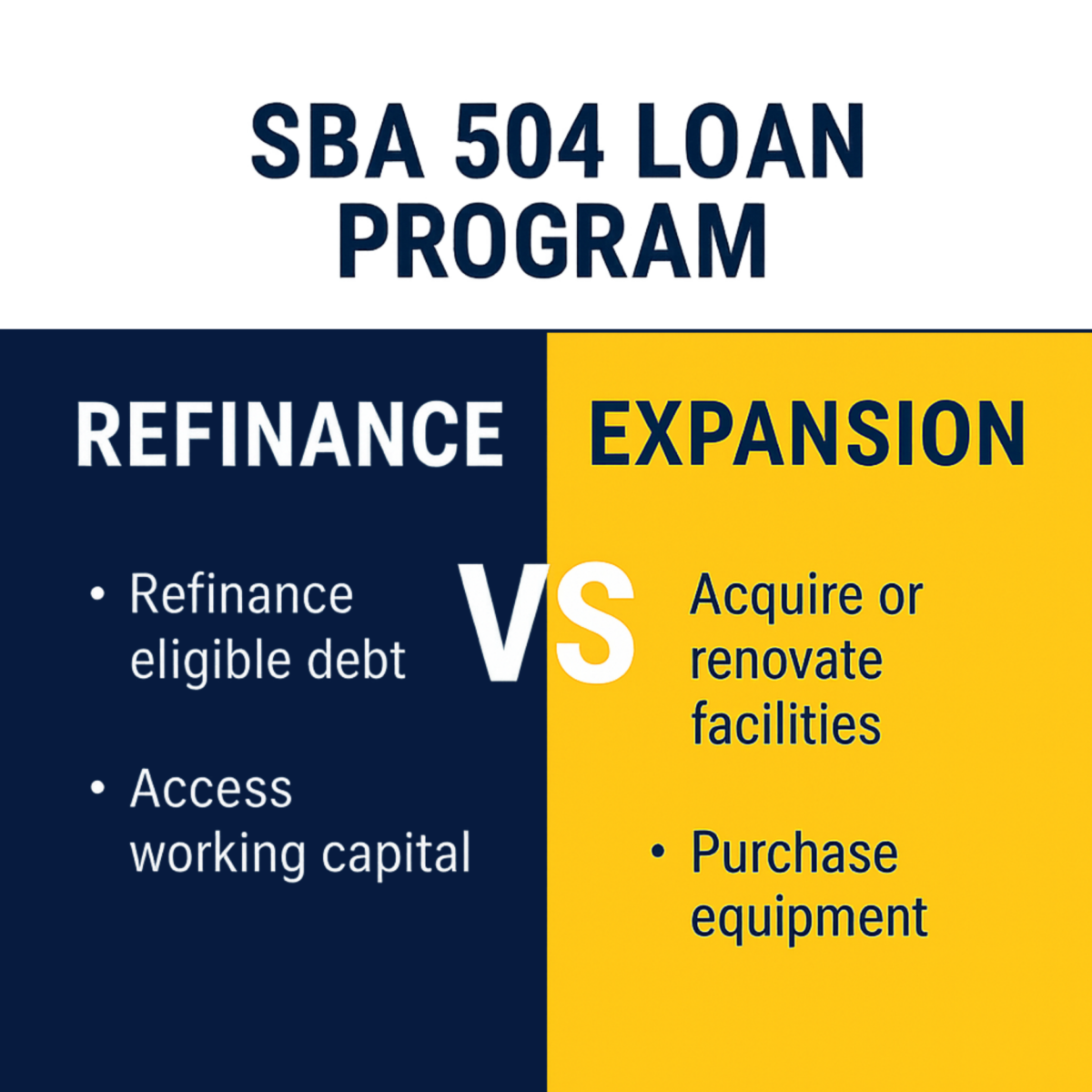
The SBA 504 Loan Program has long been one of the most powerful financing tools available to small business owners looking to purchase real estate or equipment. But recent rule changes—effective late 2024 and continuing into 2025—have significantly expanded what the program can do, especially when it comes to refinancing.
Understanding the difference between traditional SBA 504 refinancing and the new expanded flexibility is key to helping business owners unlock more capital, improve cash flow, and fuel growth.
What Is the SBA 504 Loan Program?
The SBA 504 loan is designed to provide long-term, fixed-rate financing for major business assets such as:
- Commercial real estate
- Building construction or renovation
- Heavy equipment
The typical structure includes:
- 50% from a bank or lender
- 40% from the SBA (via a Certified Development Company)
- 10% down from the borrower
This structure allows businesses to secure lower down payments and predictable long-term payments.
Traditional SBA 504 Refinance: How It Worked
Historically, SBA 504 refinancing was somewhat limited and more restrictive than many business owners realized.
Key limitations included:
- Cap on refinancing without expansion (typically 50%)
- Strict eligibility standards (85% of original loan had to be used for fixed assets)
- Limited cash-out for business expenses
- A required 10% “substantial benefit” test (e.g., lower monthly payments)
- Restrictions on refinancing certain government-backed loans
These rules meant refinancing was often only viable if:
- The business was expanding, OR
- The borrower could demonstrate clear cost savings
The Expanded SBA 504 Program: What’s Changed
In late 2024, the SBA introduced sweeping updates to the 504 refinance program, dramatically increasing flexibility and accessibility for borrowers.
1. Full Refinancing Without Expansion
One of the biggest changes:
- The 50% cap has been removed
✅ Businesses can now refinance up to 100% of eligible debt without needing to expand.
2. Increased Cash-Out & Working Capital
Previously:
- Cash-out was capped and restricted
Now:
- Loan-to-value increased to 90%
- Cap on eligible business expenses removed
✅ Businesses can access capital for:
- Payroll
- Rent
- Inventory
- Operating expenses
3. Lower Qualification Barriers
The updated rules reduced eligibility thresholds:
- The “substantially all” requirement dropped to 75% (from higher thresholds)
- More types of debt are now eligible
✅ This means more borrowers qualify—even if their original loan wasn’t perfectly structured.
4. Easier Refinance of Government Debt
Before:
- Refinancing SBA or government-backed loans required a 10% payment reduction
Now:
- That requirement has been eliminated in many cases
✅ Opens the door to refinancing:
- SBA 7(a) loans
- Existing 504 loans
- Other government-backed debt
5. Broader Debt Eligibility
The new rules now allow:
- Certain “other secured debt” to be included
- More flexibility in structuring refinance deals
✅ This creates opportunities to consolidate multiple debts into one fixed-rate solution.
SBA 504 Refinance vs. Expanded Program: Side-by-Side
| Feature | Traditional Refinance | Expanded 504 Program |
|---|---|---|
| Refinance without expansion | Limited (≈50%) | ✅ Up to 100% |
| Cash-out for business use | Restricted | ✅ Expanded, no cap |
| Loan-to-value (LTV) | ~85% typical | ✅ Up to 90% |
| Government debt refinance | Difficult | ✅ Easier, fewer restrictions |
| Eligibility flexibility | Tight | ✅ More inclusive |
| Working capital access | Very limited | ✅ Built-in feature |
What This Means for Business Owners
The expanded SBA 504 program shifts refinancing from a limited, situational tool into a strategic financial solution.
Businesses can now:
- Lower monthly payments
- Access working capital without new loans
- Consolidate debt into a fixed-rate structure
- Refinance even without expansion plans
- Unlock equity tied up in real estate or equipment
Who Should Consider the Expanded Program?
This is especially valuable for businesses with:
- High-interest commercial real estate loans
- Upcoming balloon payments
- Existing SBA 7(a) loans
- Tight cash flow but strong equity
- Growth plans but limited liquidity
Final Takeaway
The SBA 504 refinance program has evolved—significantly.
What was once a narrow refinancing option is now a flexible capital strategy that helps small businesses stabilize, grow, and reinvest in their future.
For many business owners, the question is no longer:
“Do I qualify for a refinance?”
It’s now:
“How much can I unlock to grow my business?”
Contact us today! Commercial Resources is your partner in growth for small businesses.