SBA 504 Loan Program: Refinance vs. the New Expanded Opportunities
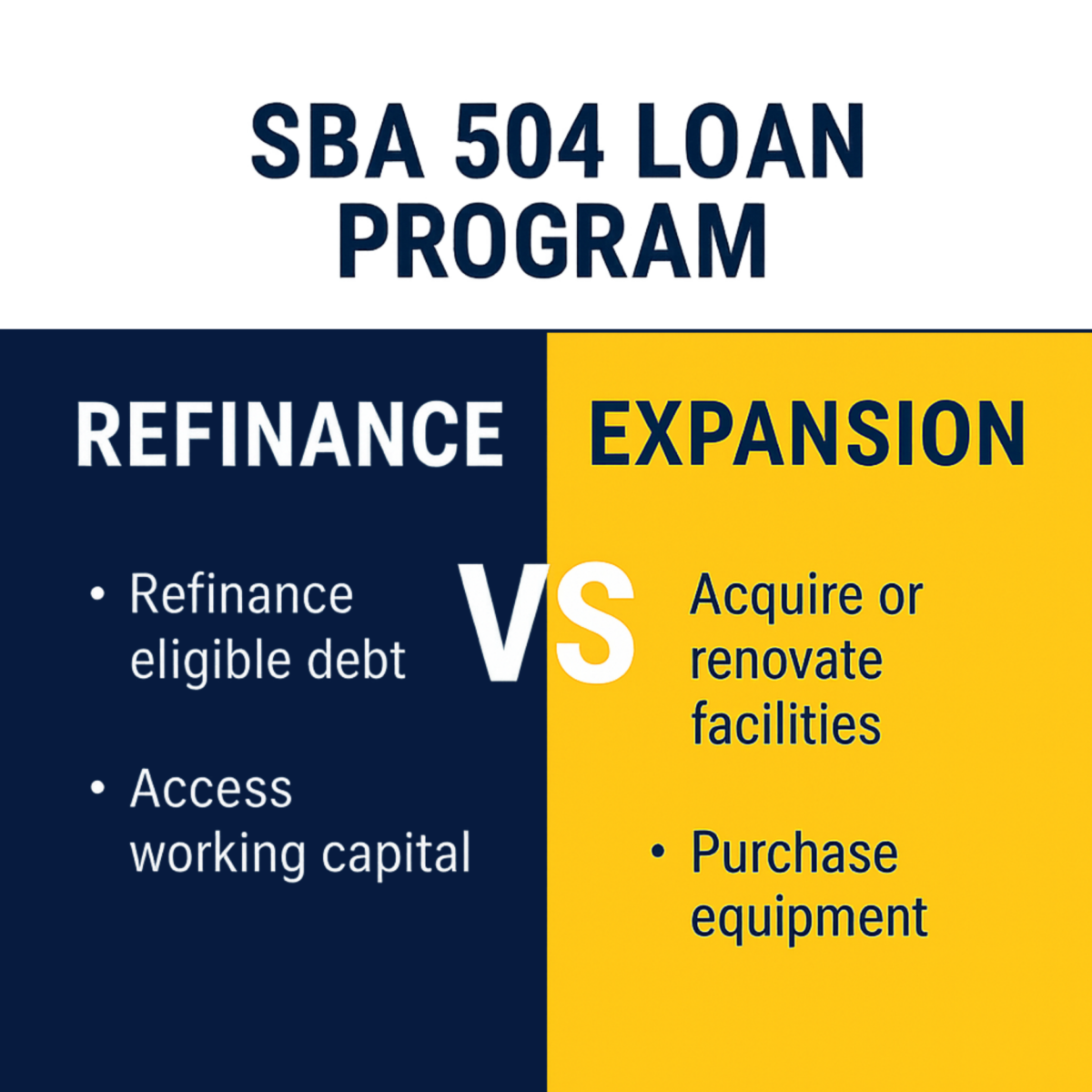
The SBA 504 loan program has expanded significantly, offering greater flexibility than traditional refinancing. Learn the key differences and how businesses can unlock more capital.
Expanding or purchasing a daycare center can be an exciting next step for early childhood professionals looking to grow their impact — but it often requires significant financial investment. Whether you’re opening a second location, renovating an existing space, or acquiring an established center, the right financing strategy can make the process smoother, smarter, and more affordable.
This guide breaks down the most effective funding options for daycare owners and the steps you can take to secure the financing you need.
Before seeking financing, create a clear picture of how much capital you’ll need. Common costs include:
A detailed budget not only guides your financial decisions but also strengthens your funding applications.
Daycare businesses are uniquely eligible for a variety of funding sources because they support essential community childcare needs. Below are popular financing pathways.
SBA loans are one of the most common financing tools for daycare owners thanks to competitive interest rates and long repayment terms.
Best SBA programs for child care centers:
These loans require a strong business plan, good credit, and financial documentation, but they offer some of the most favorable terms available to small business owners.
If your daycare has a proven track record of success and stable revenue, banks may offer competitive business loans. These are ideal for:
Banks may require collateral, tax returns, cash flow statements, and business projections.
Depending on your state, there may be grants available for early learning providers. These can support:
While grants can be competitive and time‑limited, they’re worth pursuing because they do not require repayment.
If your goal is to purchase a building for your center, a commercial real estate loan may be the right option. These loans typically offer:
These can be combined with SBA backing for even more favorable terms.
If you already own a center, a business line of credit can be a flexible way to fund:
You only pay interest on what you use, making it a good tool for short‑term or phased projects.
If you’re buying an existing daycare, sometimes the seller will partially finance the sale. This:
Negotiating these terms can make the purchase far more accessible.
Lenders and investors want to see that you understand the daycare business and have a realistic path to profitability.
Your plan should include:
A well‑built business plan increases approval odds dramatically.
Before applying for financing, take these steps:
The more financially stable you appear, the better your financing terms will be.
Financing for daycare centers can be complex. Bringing in an expert can help you:
This is especially helpful for new owners or multi‑site expansions.
Think beyond the loan approval. Sustainable daycare growth requires:
Good financial management ensures you stay attractive to lenders later — and keep your center thriving.
Securing financing to buy or expand a daycare is absolutely achievable with preparation, clarity, and the right funding strategy. Whether you pursue SBA loans, grants, bank financing, or seller support, your investment will help bring high‑quality childcare to more families — a win for both your business and your community.
Securing financing is one of the biggest hurdles small business owners face—and a strong business plan is often the deciding factor between approval and rejection. Banks don’t just want a vision; they want proof that your business is viable, profitable, and capable of repaying the loan.
Below is a practical, lender‑focused guide to crafting a business plan that gives you the best shot at getting funded.
Think of your executive summary as the “elevator pitch” for your entire plan. Lenders read this section first—and often decide right away whether the rest is worth their time.
A strong executive summary should:
Pro tip: Write this section last. It’s easier once you’ve completed the rest of the plan.
Lenders want context—who you are, what you do, and why your business exists.
Include:
Banks approve businesses that understand their customers and competitors. A thorough market analysis builds confidence.
Cover:
Back up every claim with real data whenever possible.
This section outlines how your business operates day‑to‑day.
Include:
Banks want to see structure and scalability.
Explain:
This demonstrates how you’ll generate revenue—and keep it coming.
A strong team reduces lender risk.
Include:
Provide:
Keep projections realistic—not overly optimistic.
Spell out exactly:
Lenders appreciate clarity and specificity.
Add items such as:
Your goal is to eliminate uncertainty before it arises.
A bank‑ready business plan doesn’t just help you secure financing—it becomes a roadmap for growth. Done right, it shows lenders that you have clarity, discipline, and a real strategy for success.
If your business needs help, contact us at
👉 https://commresinc.com
In today’s rapidly shifting economy, small businesses face more pressure than ever to stay competitive, maintain healthy cash flow, and capitalize on new opportunities. Yet despite strong entrepreneurial energy, access to capital remains one of the biggest challenges—and one of the most important success factors.
For small businesses, strategic financing isn’t just helpful; it’s transformational. Recent data reveals exactly why securing the right funding partner can make the difference between growth and stagnation.
Small business funding demand in 2025–2026 hit record levels, driven both by rising operating expenses and new expansion opportunities. According to Cardiff’s 2025 U.S. Small Business Funding Report:
This growing gap is pushing many businesses to seek more flexible non‑bank financing options—exactly where companies like Commercial Resources, Inc. provide critical solutions.
New findings from the 2025 Intuit QuickBooks Small Business Financing Report show a striking trend:
For many entrepreneurs, the difference isn’t desire—it’s access to smart, structured capital.
With traditional lenders becoming harder to rely on, small businesses are turning to more modern funding solutions:
This shift underscores the importance of lenders like Commercial Resources—fast, flexible, and built around real‑world needs.
The macroeconomic climate plays a major role in how business owners plan their next steps:
In this environment, reliable capital isn’t optional—it’s essential.
According to the U.S. Treasury’s 2025 Small Business Financing Landscape Report:
Commercial Resources, Inc. simplifies this process—offering clarity, support, and customized financing programs that help owners make confident decisions.
Based on current market conditions and data, here’s why businesses benefit from taking advantage of financing now:
Financing allows companies to expand operations, hire staff, purchase equipment, enter new markets, and increase marketing. Businesses using financing grow faster and more sustainably. 2. Stabilizing Cash Flow
Even profitable businesses face cash‑flow gaps. Financing helps navigate slow seasons, rising operating costs, and unexpected expenses.
With economic conditions shifting, flexibility is vital. Modern financing options—including revolving lines of credit and AI‑supported underwriting—help businesses respond quickly to new opportunities.
Small businesses relying on personal credit cards or savings expose owners to unnecessary stress and risk. Dedicated business financing protects personal assets.
Small business owners are ambitious, resilient, and innovative—but no business grows on passion alone. The data is clear:
✔ Funding demand is at record highs
✔ Businesses using financing grow faster and stay healthier
✔ Fintech lenders are opening doors traditional banks are closing
✔ Economic uncertainty makes access to capital more important than ever
Commercial Resources, Inc. is built to help small businesses navigate today’s complex financial landscape with confidence—by providing accessible, flexible, and strategic funding solutions.
For many businesses, securing capital isn’t just about growth — it’s about survival, stability, and staying competitive in a marketplace transformed by technology and rising costs. In 2026, small business financing has become more flexible, more data‑driven, and more specialized, offering companies a wider variety of tools to fund their operations, equipment needs, and expansion plans. However, this new landscape also demands that business owners make smarter, more strategic funding choices.
This guide breaks down the most important financing trends and tools shaping the market today — and what they mean for Commercial Resources’ clients who rely on smart, accessible capital solutions.
Traditional lending models have shifted dramatically. Instead of relying mainly on credit scores and historical tax returns, many lenders now use real‑time financial data pulled directly from accounting and commerce platforms to assess risk. Systems such as QuickBooks, Stripe, Amazon, and Shopify now feed lenders live cash‑flow intelligence.
At the same time, interest rates remain higher than pre‑pandemic levels, and lenders — both traditional banks and fintech companies — expect businesses to provide clear financials and repayment plans before approving applications.
What this means for Commercial Resources clients:
Your real‑time financial health matters more than ever. Clean books, accurate statements, and steady revenue data help you secure better rates and faster approvals.
One of the most notable trends moving into 2026 is the shift toward smaller, targeted financing products. Instead of large, broad‑use loans, businesses now secure capital for highly specific purposes — such as equipment upgrades, inventory cycles, marketing pushes, or short‑term working capital needs.
Lenders favor these smaller, project‑based loans because they carry less risk and have clearer return pathways.
What this means for Commercial Resources clients:
A well‑defined purpose for your funding request — such as equipment replacement or facility upgrades — dramatically increases approval odds.
Revenue‑based financing (RBF) continues to gain traction, especially among eCommerce and digital‑first businesses. With RBF, repayment is tied to a percentage of future revenue — meaning payments flex as sales fluctuate.
Platforms like Onramp Funds provide fast access to capital (sometimes within 24 hours) by integrating directly with online sales platforms.
What this means for Commercial Resources clients:
If your business has cyclical or seasonal revenue, RBF may offer the flexibility you need without the pressure of fixed monthly payments.
Despite new alternatives, conventional business loans remain a cornerstone of commercial financing. They often offer lower long‑term costs, predictable amortization, and access to higher dollar amounts. However, lenders now expect:
Loan approvals are increasingly based on real‑time operational health rather than long‑term credit history alone.
What this means for Commercial Resources clients:
Well‑prepared documentation and clearly defined needs help secure better, more stable financing terms.
Every year, small businesses miss out on valuable grants and tax credits simply because they aren’t aware they exist.
For example:
Grants from American Express, QuickBooks, DoorDash, and other national programs support a range of industries
What this means for Commercial Resources clients:
If you’re acquiring equipment or improving products/processes, leveraging tax incentives can dramatically reduce out‑of‑pocket spending.
Many businesses still qualify for federal, state, and private relief programs — including grants, credits, subsidized loans, and sector‑specific assistance. Many owners incorrectly assume they won’t qualify, leaving thousands of dollars unused.
What this means for Commercial Resources clients:
It’s worth reviewing relief programs annually — many are industry‑specific and underutilized.
A common mistake business owners make is using their operating cash to fund expansions — weakening payroll stability, inventory budgets, and emergency reserves.
Instead, experienced businesses separate:
Strategic financing enables growth while protecting liquidity.
What this means for Commercial Resources clients:
Financing should fuel expansion — not jeopardize your operational cash flow.
To get the best rates and widest range of options, businesses should be prepared with:
With fintech lenders increasingly using real‑time data to evaluate your business, clean financial systems have become essential.
Small business financing in 2026 is more dynamic, more flexible, and more technologically advanced than ever before. Whether you need capital for equipment, expansion, staffing, or cash‑flow stabilization, today’s market offers more options than at any point in history.
But choosing the right financing tool requires clarity, preparation, and strategy.
Commercial Resources is here to help your business navigate this evolving landscape, secure the capital you need, and grow without compromising your operational stability.