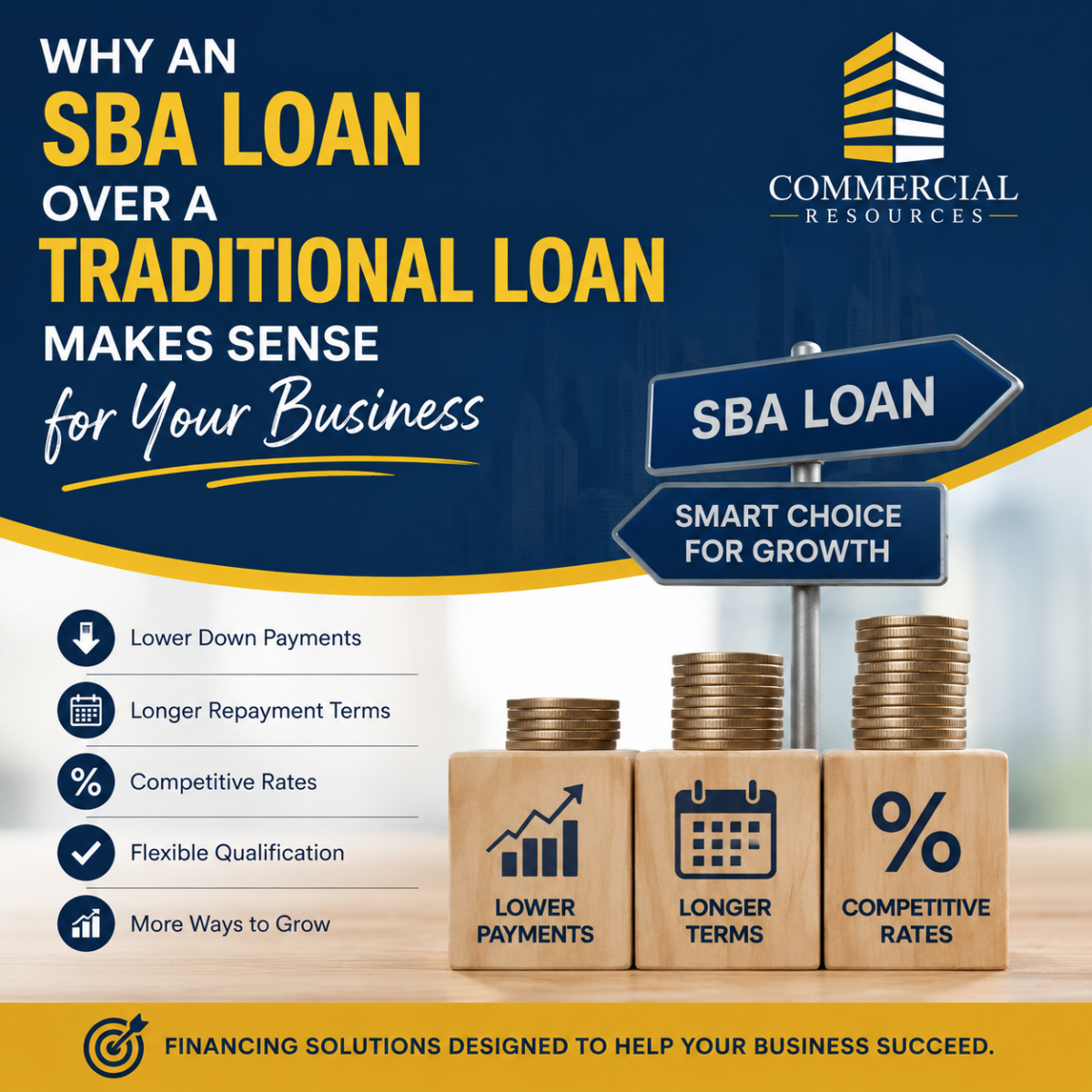
Choosing between an SBA loan and a traditional business loan? Learn the key differences and why SBA financing often provides better terms, lower monthly payments, and greater flexibility for growing businesses.
SBA 504 refinancing offers business owners a powerful way to lower monthly payments, improve cash flow, and stabilize long-term finances. Discover how refinancing can strengthen your business in 2026.
When a small business is ready to purchase a building, expand into a larger space, or finance major renovations, two SBA loan programs dominate the conversation: SBA 504 and SBA 7(a). Both can be used for commercial real estate, but they differ significantly in structure, terms, and best‑use scenarios.
This guide breaks down the key differences so business owners can choose the best option.
🧱 What Is an SBA 504 Loan?
An SBA 504 loan is designed specifically for fixed‑asset purchases, including owner‑occupied commercial real estate. These loans are known for:
✔ Below‑market, long‑term fixed interest rates
✔ Low down payments (10–20%)
✔ Long amortization periods (20–25 years)
According to SBA program guidelines, businesses can use SBA 504 loans for real estate, construction, or building improvements, making them ideal for companies looking to buy property they will occupy.
Best For:
Buying or constructing a building
Large expansion projects
Long‑term ownership plans
Businesses wanting stable, fixed rates
504 Loan Structure:
A typical 504 loan includes:
50% from a bank
40% from a Certified Development Company (CDC)
10% down payment from the borrower
🏦 What Is an SBA 7(a) Loan?
The SBA 7(a) program is the SBA’s most flexible financing option, covering a wide range of uses beyond real estate—working capital, refinancing, equipment, and more.
SBA 7(a) loans can be used for commercial real estate when the business will occupy at least 51% of the property. They also offer:
✔ Higher borrowing limits (up to $5 million)
✔ More flexible use of funds
✔ Easier approval for mixed‑use projects
NerdWallet confirms that both 7(a) and 504 programs can be used for commercial real estate, but 7(a) loans offer greater flexibility for borrowers who may need working capital alongside the purchase.
Best For:
Mixed‑use buildings
Borrowers needing cash for improvements + operations
Projects where flexibility is important
7(a) Loan Traits:
Variable or fixed rates
Longer approval timeline than some online lenders
Often easier for businesses with less collateral
🆚 Key Differences at a Glance
Feature
SBA 504 Loan
SBA 7(a) Loan
Best Use
Buying or improving commercial real estate
Real estate + broader business uses
Rates
Typically lower, fixed
Fixed or variable
Down Payment
10–20%
Typically ~10%
Max Loan Size
Up to ~$5.5M (CDC portion)
Up to $5M
Speed
Moderate
Slower, more paperwork
Flexibility
Limited—real estate only
High—can include working capital
Occupancy Rule
51% minimum
51% minimum
🏁 Which Should You Choose?
Choose SBA 504 if:
You want long‑term fixed rates
You’re buying a building solely for your business
You need large-dollar financing between $1–10M
You want a lower down payment and strong terms
Choose SBA 7(a) if:
You need flexibility (renovations + equipment + working capital)
You’re purchasing a mixed‑use building
You prefer a single-loan structure
💡 Final Takeaway
If your main goal is buying or expanding into a building, the SBA 504 loan is usually the superior option due to its interest rates, structure, and terms. But if you need flexibility, or if your project includes cash‑flow needs alongside real estate, the SBA 7(a) loan may be the better fit.