
Why an SBA Loan Often Makes More Sense Than a Traditional Business Loan

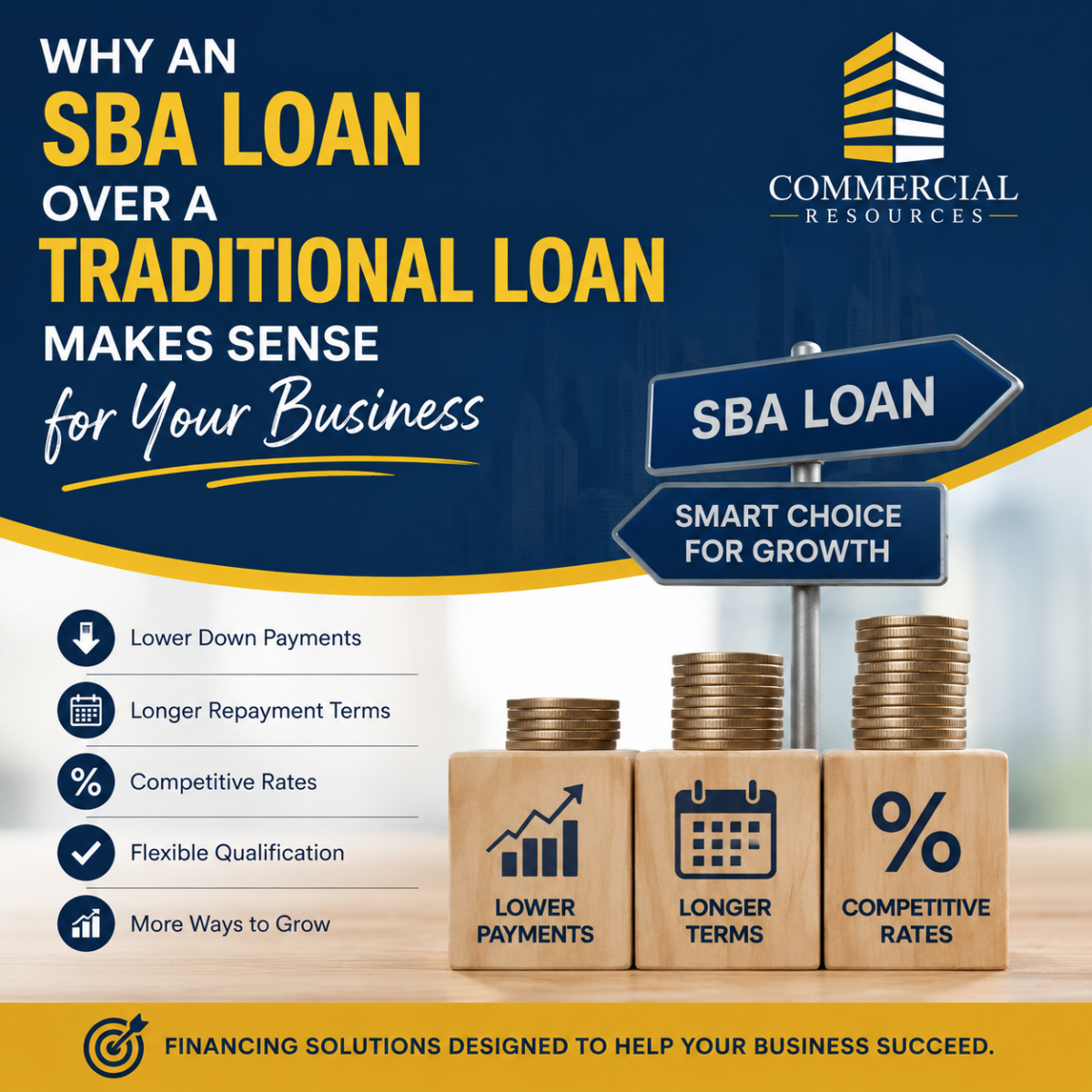
SBA vs. Traditional
When business owners need financing, one of the first questions they face is whether to pursue a conventional bank loan or an SBA-backed loan. While both options can provide the capital needed to grow, expand, or stabilize a business, SBA loans frequently offer advantages that make them the smarter long-term choice for many small and mid-sized companies.
At Commercial Resources, we help business owners understand their financing options and identify the loan program that best aligns with their goals. Here’s why an SBA loan may be the better fit for your business.
What Is an SBA Loan?
An SBA loan isn’t issued directly by the Small Business Administration. Instead, the SBA guarantees a portion of the loan made by an approved lender. This government guarantee reduces the lender’s risk, allowing businesses to qualify for financing with more favorable terms than many conventional loans.
1. Lower Down Payments Preserve Your Cash
Cash flow is one of the most valuable assets any business has.
Conventional business loans often require larger down payments or higher equity contributions. SBA loans, however, typically require less money upfront, allowing business owners to preserve working capital for payroll, inventory, marketing, or unexpected expenses.
Instead of tying up valuable cash in the financing process, you can keep it invested where it matters most—your business.
2. Longer Repayment Terms Mean Lower Monthly Payments
One of the biggest advantages of SBA financing is extended repayment terms.
Depending on the loan purpose, SBA loans may offer repayment periods of:
- Up to 10 years for working capital, equipment, and business acquisitions
- Up to 25 years for commercial real estate
Longer terms generally translate into lower monthly payments, improving cash flow and giving your business greater financial flexibility. Conventional loans often have shorter repayment periods, resulting in higher monthly obligations.
3. Competitive Interest Rates
Many business owners assume SBA loans carry higher interest rates because they’re government-backed. In reality, SBA loans have maximum allowable interest rates established by the SBA, helping borrowers access competitive financing compared to many traditional commercial loans.
For growing businesses, even a modest reduction in interest expense can save thousands of dollars over the life of a loan.
4. More Flexible Qualification Standards
Traditional lenders often reserve conventional loans for businesses with exceptional financial statements, strong collateral, and lengthy operating histories.
Because the SBA guarantees a portion of the loan, lenders can often approve borrowers who may not qualify under conventional underwriting standards. While borrowers must still demonstrate the ability to repay the loan, SBA financing can provide opportunities for businesses that might otherwise struggle to secure funding.
5. Finance More Than Just Equipment
Many people think SBA loans are only for startups. In reality, SBA financing can support a wide range of business needs, including:
- Purchasing commercial real estate
- Buying an existing business
- Working capital
- Equipment and machinery
- Inventory
- Debt refinancing
- Business expansion
- Partner buyouts
The SBA 7(a) program, in particular, is designed to be one of the most flexible financing options available to small businesses.
6. Better Cash Flow Supports Long-Term Growth
Business owners often focus on the total loan amount while overlooking monthly affordability.
Lower payments created by longer SBA loan terms can improve debt-service coverage, strengthen operating cash flow, and provide flexibility during slower business cycles. This financial cushion can make it easier to hire employees, invest in technology, expand operations, or pursue new opportunities without placing unnecessary strain on the business.
When a Conventional Loan Might Be Better
SBA loans aren’t the right solution for every situation.
A conventional loan may be preferable if:
- Your business has exceptional financial strength.
- You need funding immediately and can’t wait through the SBA approval process.
- Your financing request doesn’t meet SBA eligibility requirements.
- You’re seeking financing for a project outside SBA guidelines.
For well-established companies with substantial assets and excellent banking relationships, conventional financing may provide a faster closing with fewer program requirements.
Why Work with Commercial Resources?
Finding the right financing isn’t simply about getting approved—it’s about finding the structure that best supports your business for years to come.
At Commercial Resources, we work closely with business owners to evaluate their financing needs, compare lending options, and connect them with lenders offering competitive SBA and conventional loan programs. Whether you’re purchasing commercial property, acquiring another business, refinancing debt, or expanding operations, our team helps simplify the process from application to closing.
The Bottom Line
For many small businesses, an SBA loan offers the ideal combination of affordability, flexibility, and long-term value. Lower down payments, extended repayment terms, competitive rates, and broader qualification standards make SBA financing one of the most effective tools available for business growth.
Every business is different, which is why understanding your options before choosing a lender is so important.
If you’re considering financing for your next business opportunity, Commercial Resources can help you determine whether an SBA loan or a conventional loan is the better fit for your goals.
Ready to explore your financing options? Contact Commercial Resources today to discuss your business objectives and discover financing solutions designed to help your company grow.