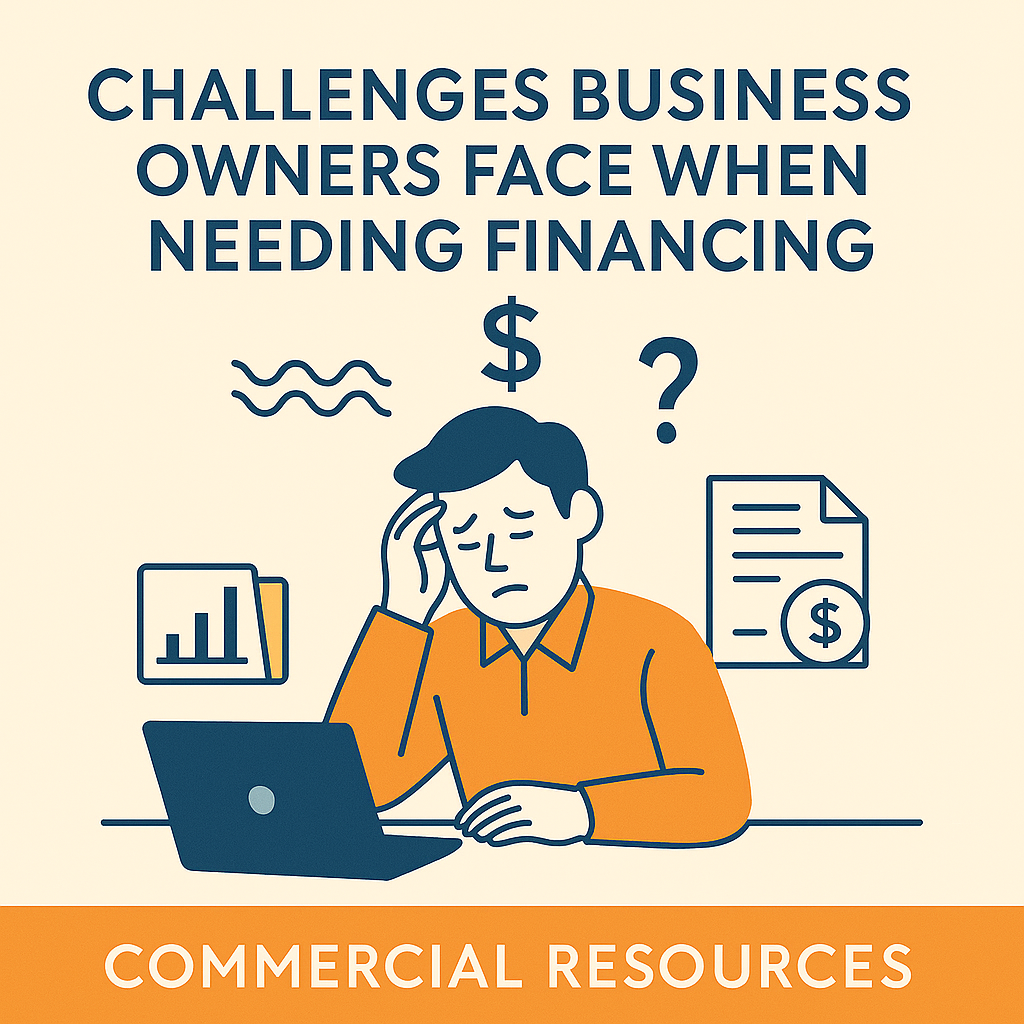
Challenges Business Owners Face When Needing Financing

Securing financing is one of the most critical steps in building, growing, or sustaining a business. Yet, for many business owners, accessing the right funding at the right time feels overwhelmingly complex. Whether you’re seeking capital for expansion, equipment, payroll, or cash‑flow stabilization, the challenges are often universal. Understanding these hurdles can help business owners better prepare — and choose partners like Commercial Resources who simplify the process.


1. Strict Lending Requirements

Traditional lenders often require strong credit histories, substantial collateral, and detailed financial records. Even profitable businesses may struggle to meet every requirement, particularly newer companies or those in industries considered “higher risk.”

Common lender expectations include:

  • High personal and business credit scores
  • Multi-year financial statements
  • Significant collateral
  • A lengthy operating history

Businesses that fall short are often denied, even if they show strong potential.


2. Cash Flow Limitations

Cash flow is one of the biggest indicators lenders examine. Seasonal businesses, companies with slow-paying customers, or businesses experiencing rapid growth often face cash flow gaps — creating red flags for lenders.

Even temporary dips can impact:

  • Loan approval
  • Loan size
  • Interest rates offered

This creates a catch‑22: businesses need financing to stabilize cash flow, but they need strong cash flow to get financing.


3. Limited Awareness of Funding Options

Many business owners only consider traditional bank loans, not realizing there are alternative, flexible financing solutions that may better fit their needs.

Examples include:

  • Equipment financing
  • Working capital advances
  • Invoice factoring
  • Merchant cash advances
  • Asset‑based lending
  • Lines of credit designed for businesses with fluctuating revenue

Without understanding these options, owners may delay financing, accept unfavorable terms, or assume they won’t qualify at all.


4. Time Constraints and Slow Approvals

Running a business leaves little time for lengthy paperwork and repeated lender requests. Traditional financing can take weeks or even months to process.

This is especially challenging when funding is needed for:

  • Immediate operational costs
  • Sudden equipment failure
  • Seasonal inventory demands
  • Growth opportunities with short windows

When time is money, slow approvals can cost more than the financing itself.


5. Difficulty Preparing Documentation

Lenders often require:

  • Tax returns
  • Profit & loss statements
  • Bank statements
  • Debt schedules
  • Accounts receivable aging reports
  • Business plans

Many business owners simply don’t have these documents readily organized, especially those without dedicated financial staff. Preparing them can cause stressful delays.


6. High Interest Rates or Unfavorable Terms

Even when financing is approved, terms may not be ideal. Some owners face:

  • Higher‑than‑expected rates
  • Short repayment periods
  • Large upfront fees
  • Personal guarantees
  • Daily or weekly repayment schedules

These terms may solve a short-term need but strain long-term operations if not carefully evaluated.


7. Impact of Economic Conditions

Economic uncertainty — rising interest rates, supply chain issues, inflation, or sector-specific downturns — can tighten lending environments. Even well-established businesses may face reduced borrowing capacity simply due to market shifts outside their control.


How Commercial Resources Helps

Commercial Resources understands these challenges and works to eliminate friction in the financing process. By connecting businesses with flexible funding solutions tailored to their industry, revenue model, and timing needs, Commercial Resources ensures owners receive realistic options without unnecessary barriers.

Whether you need fast working capital, equipment financing, or a customized lending solution, the team is dedicated to simplifying every step.

Smart Strategies for Small Business Financing

Access to financing is one of the biggest challenges small businesses face. Whether you’re launching a startup or expanding operations, understanding your funding options is critical for success.

Why Financing Matters
Proper financing ensures you have the resources to cover operating costs, invest in growth, and weather unexpected challenges.

Top Financing Options for Small Businesses

  1. Traditional Bank Loans
    • Ideal for businesses with strong credit and collateral.
  2. SBA Loans
    • Government-backed loans with favorable terms for small businesses.
  3. Business Lines of Credit
    • Flexible funding for short-term needs.
  4. Equipment Financing
    • Perfect for businesses needing machinery or technology upgrades.
  5. Alternative Lenders
    • Faster approvals, though often at higher interest rates.

Tips for Success

  • Maintain a strong credit profile.
  • Prepare a detailed business plan.
  • Compare multiple lenders for the best terms.

Conclusion
Financing doesn’t have to be overwhelming. By exploring the right options and planning ahead, you can secure the capital your business needs to thrive.

📌 Learn more and get expert guidance at: commresinc.com

The Power of Smart Financing: How Commercial Resources Helps Small Businesses Grow

For more than three decades, Commercial Resources Inc. has served as a trusted financial partner for small and midsize businesses looking to grow, stabilize, or scale. Since 1990, the company has specialized in connecting entrepreneurs with the funding solutions they need — from SBA loans to commercial mortgages, industry‑specific lending, and strategic guidance that strengthens long‑term success. [commresinc.com]

In today’s fast‑moving business environment, reliable access to capital is more important than ever. Whether you’re planning an expansion, renovating your property, or navigating a cash‑flow crunch, Commercial Resources provides tailored lending solutions backed by decades of expertise in banking, commercial real estate lending, and operational consulting.


Why Financing Matters More Than Ever

Businesses across industries face shifting market conditions, rising costs, and record‑high competition. Yet the need for capital remains constant — and often urgent.

Commercial Resources understands these challenges. The company’s extensive experience structuring both debt and equity financing gives clients an edge when it comes to securing favorable loan terms, even in complex financial situations. Their long‑standing relationships with lenders allow them to negotiate effectively and close deals where others fall short.


A Look at the Loan Programs That Power Growth

1. SBA Loans

SBA‑backed lending continues to be one of the most affordable paths for small business owners to access capital. Commercial Resources helps clients choose the right SBA program depending on their goals — whether it’s purchasing equipment, expanding facilities, or increasing working capital.

2. Commercial Mortgages

For businesses planning to purchase or renovate real estate, the company offers strategic guidance and access to lenders that understand the nuances of commercial property acquisition, refinancing, and development.

3. Industry‑Specific Financing

Commercial Resources works with a diverse mix of sectors, from hospitality and education to retail and lodging. By understanding the financial models of different industries, they help clients secure funding aligned with industry‑specific cash‑flow patterns and growth cycles. Clients include hospitality brands, early childhood centers, and national hotel franchises.

4. Business Growth Tools

Beyond loans, Commercial Resources offers business tools and consulting that support long‑term strength — including marketing resources, financial analysis, and operational improvement plans to help leaders build more efficient and profitable organizations.


A Trusted Partner for Entrepreneurs Since 1990

Commercial Resources’ founder, Jim Roche, brings more than 20 years of experience in banking and commercial real‑estate lending, having built and managed loan departments throughout New England. This deep institutional knowledge helps clients navigate challenges, structure strong loan requests, and secure capital with confidence.