
How Tax Season Can Affect Your Ability to Get a Small Business Loan (and What Smart Borrowers Should Do About It)

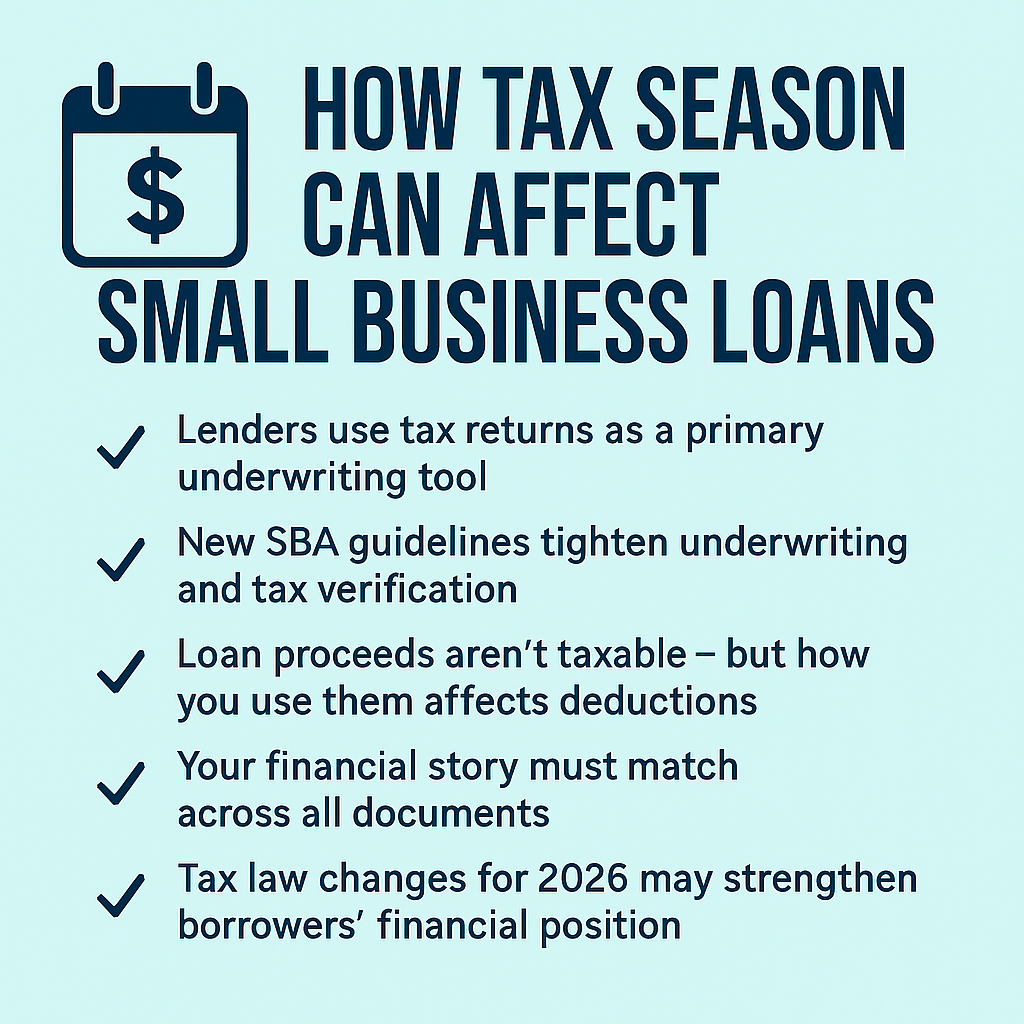
Tax season isn’t just about preparing returns — it can directly impact your ability to secure financing, buy a business, or purchase commercial property. Whether you’re seeking an SBA loan, bank financing, or alternative funding, the accuracy and strength of your tax documentation play a major role in how lenders evaluate your business.
Below is a practical, lender-focused guide on how tax season affects financing approvals — and what business owners and commercial buyers can do to improve their chances.
1. Lenders Use Your Tax Returns as a Primary Underwriting Tool
When underwriting a loan, lenders rely heavily on business and personal tax returns to confirm financial stability, verify income, and reconcile cash flow. Business tax returns (usually the last 2–3 years) are used to validate earnings, examine deductions, and confirm tax compliance. Underwriters compare these tax returns with financial statements and bank activity, checking for consistency, unusual items, and signs of risk. Personal tax returns are also reviewed for owners of small businesses, particularly sole proprietors and LLCs, since personal income is closely tied to business operations. [finhelp.io]
If required returns are missing or incomplete, the business is not eligible for SBA financing until those documents are filed and verified. Lenders must obtain IRS tax transcripts and match them against the financial information submitted during underwriting, making accurate filings essential. [starfieldsmith.com]
2. New SBA Guidelines Tighten Underwriting and Tax Verification
Recent updates to SBA lending rules have restored more rigorous underwriting standards for both 7(a) and 504 loans. As of June 1, 2025, lenders must follow updated Standard Operating Procedures that include tax transcript verification, stricter eligibility rules, and more responsibility placed on lenders to confirm the accuracy and reliability of financial information. These updates reverse relaxed rules from recent years and reinforce compliance requirements during tax season. [congress.gov]
In addition, lenders must reinstate tax transcript verification for all SBA 7(a) and 504 loans before disbursing funds — meaning any errors, omissions, or delays in filing tax returns can stall or derail your loan approval. These changes emphasize the importance of keeping tax filings current, orderly, and accessible. [cdcloans.com]
3. Loan Proceeds Aren’t Taxable — But How You Use Them Affects Deductions
Many business owners are surprised to learn that loan proceeds are not considered taxable income, because they are liabilities that must be repaid. However, interest payments, origination fees, and other costs associated with obtaining the loan can often be deducted as business expenses. Using loan funds for operating expenses typically results in deductible expenses in the same year, while capital asset purchases (such as equipment or commercial property) may be depreciated over time. [biggerbottomline.com]
This makes proper tax planning essential for owners preparing to acquire property or expand operations through financing.
4. Your Financial Story Must Match Across All Documents
During underwriting, lenders compare returns, financial statements, and bank activity to confirm the business’s financial picture. They look for:
- Consistent revenue and expense reporting
- Clear cash flow sufficient to support debt payments
- No unpaid taxes or compliance issues
- Stability in personal income for owners
[finhelp.io]
Discrepancies in reporting — even unintentional ones — can trigger delays, additional document requests, or loan denials during tax season when filings are freshly updated.
5. Tax Law Changes for 2026 May Strengthen Borrowers’ Financial Position
Sweeping tax reforms under the One Big Beautiful Bill Act have restored or expanded multiple business tax benefits that can improve profitability and cash flow — two metrics lenders monitor closely. For example, the permanent return of 100% bonus depreciation allows businesses to expense qualifying property immediately, and the permanent 20% Qualified Business Income (QBI) deduction helps many pass‑through entities reduce taxable income. These provisions can strengthen financial ratios that lenders evaluate for loan approval. [integrabiz…utions.com]
Better tax outcomes can translate into stronger loan applications, especially for buyers preparing to acquire property or expand operations.
6. What Business Owners Should Do Before Applying for Funding
If you plan to purchase a commercial property, buy a business, or obtain growth capital this year, consider taking these steps:
✔ File all business and personal tax returns early
Lenders cannot proceed without complete filings and IRS verification.
✔ Clean up financial statements
Ensure your profit & loss, balance sheet, and cash flow statements align with tax returns.
✔ Review deductions and write-offs
Excessive deductions may reduce taxable income but can make your business appear less profitable to lenders.
✔ Work with an accountant who understands lending
The SBA specifically recommends professional accounting support to avoid errors and reduce audit risk. [creditsuite.com]
✔ Prepare to explain variances
If income fluctuated year to year, be ready to provide documentation or narrative explanations.
Final Thoughts: Tax Season Is Your Opportunity to Strengthen Your Loan Readiness
Tax season isn’t just a compliance obligation — it’s one of the most important factors affecting small business financing. Clean, accurate, and consistent tax documents can streamline the loan process, increase approval odds, and position you competitively when pursuing commercial property or acquiring a business.
If you need help evaluating your readiness for financing or assembling loan‑ready financials, Commercial Resource, Inc. can guide you through the process and connect you with the right lenders and funding options.