Small Business Administration (SBA) loans are one of the most effective and accessible financing tools available to entrepreneurs today. Whether you’re a startup looking to fund early operations or an established business wanting to expand, SBA loans provide the flexible, affordable support many traditional loans can’t match.
⭐ What Makes SBA Loans Unique?
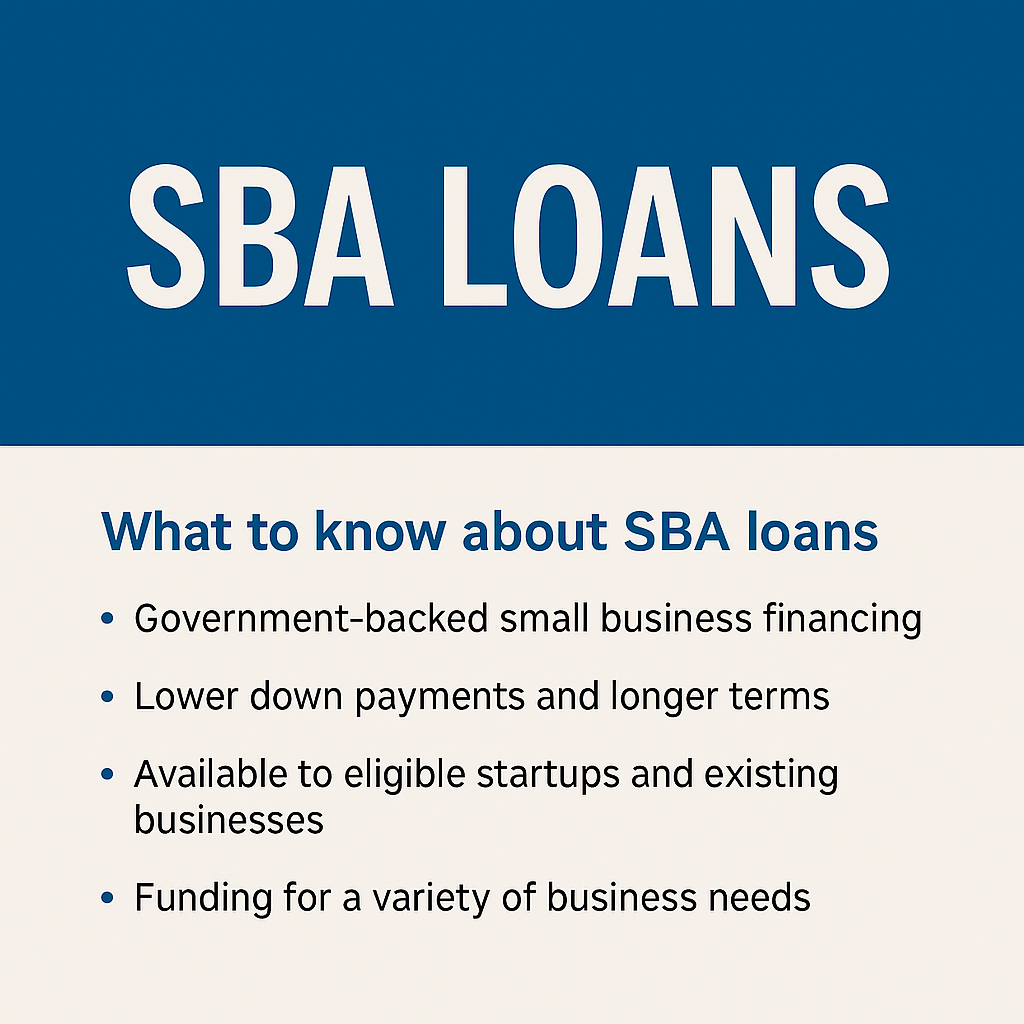
Unlike conventional loans, SBA loans are partially guaranteed by the federal government. This reduces risk for lenders and makes it easier for small business owners to qualify. In many cases, SBA loans come with lower down payments, longer repayment terms, and competitive interest rates, making them a go‑to solution for businesses across industries.
💼 Types of SBA Loans
1. SBA 7(a) Loan
The most popular and versatile SBA loan.
Perfect for:
- Working capital
- Equipment purchases
- Business acquisition
- Expansion or renovation
2. SBA 504 Loan
Designed for large, long‑term investments such as:
- Commercial real estate
- Heavy machinery
- Major infrastructure upgrades
3. SBA Microloans
Ideal for startups or very small businesses that need $50,000 or less.
Great for:
- Initial inventory
- Supplies
- Small equipment
📋 Common Eligibility Requirements
To qualify for an SBA loan, lenders typically look for:
- A solid business plan
- Good personal and business credit
- Proof of ability to repay
- U.S.‑based business operating for profit
Because SBA loans are government‑backed, documentation requirements are more detailed — but the payoff is worth it for the lower risk and better terms.
🚀 How SBA Loans Support Business Growth
SBA loans help business owners:
- Improve cash flow
- Expand into new products or markets
- Hire additional staff
- Invest in long‑term assets
- Build a stronger operational foundation
For many businesses, an SBA loan becomes the catalyst that drives long‑term success and stability.
📝 Final Thoughts
Securing financing can feel overwhelming, but SBA loans are intentionally designed to make capital more accessible for small businesses. With flexible repayment options and broad eligibility, they remain one of the most powerful tools for entrepreneurs ready to scale.
If you’re considering an SBA loan, now is a great time to evaluate your needs and prepare a strong application package. With the right preparation, SBA funding can provide the momentum your business needs to grow confidently and sustainably.