
Cash Flow Mistakes That Sink Small Businesses—And How to Avoid Them

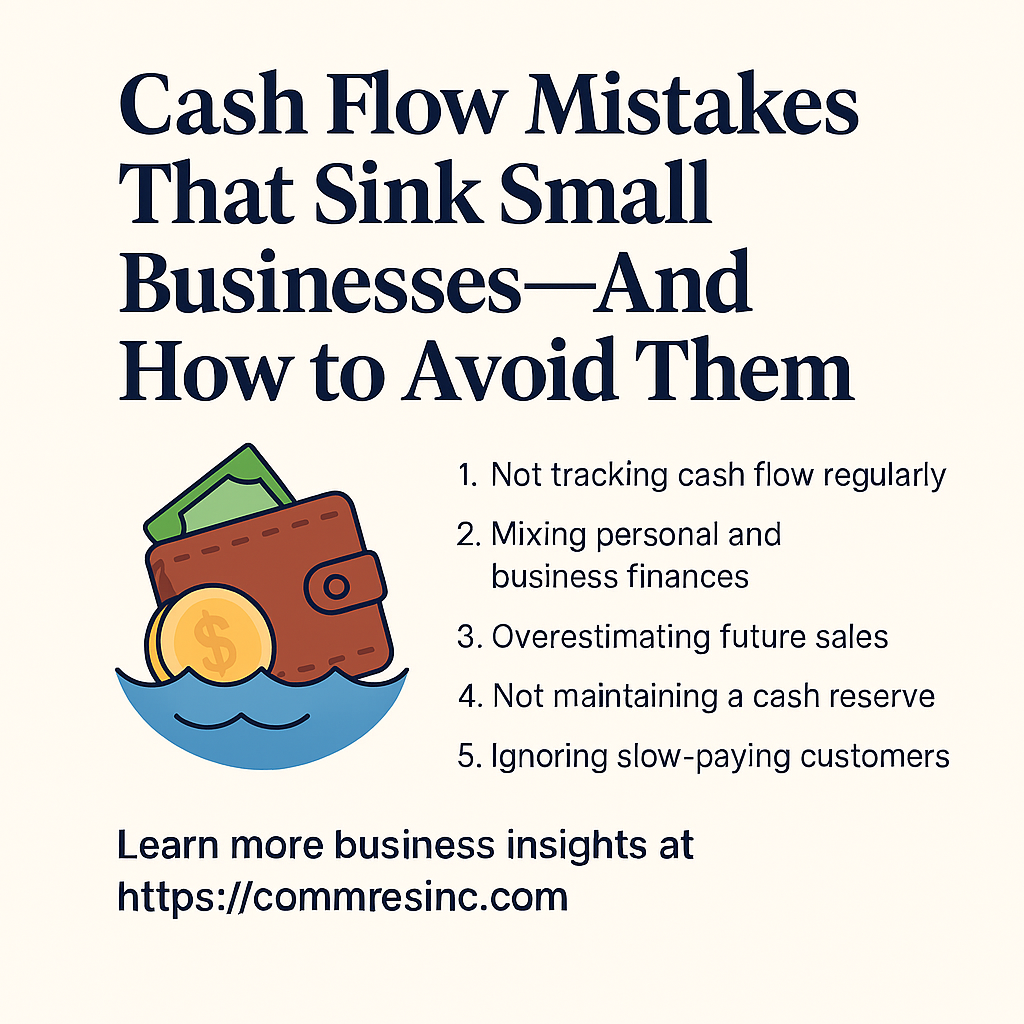
Healthy cash flow is the lifeblood of any small business. Even profitable companies can fail if money isn’t moving in and out in a stable, predictable way. Below are the most common cash flow mistakes small business owners make—and how to avoid them so your business stays strong and sustainable.
1. Confusing Profit With Cash Flow
Many business owners assume that because the company is making a profit, cash flow is automatically healthy. But profit is an accounting number—cash flow is real money in the bank.
Why it’s dangerous:
You may appear profitable on paper while struggling to pay bills, payroll, or suppliers.
How to avoid it:
- Monitor your cash flow statement monthly.
- Use accounting software that gives real‑time cash insights.
- Build a 3–6 month cash reserve.
🔗 Need help understanding your cash position? Check out financial tools and resources at https://commresinc.com.
2. Slow or Unpredictable Invoicing
Late invoicing means late payments—and that can cripple your cash cycle.
Why it’s dangerous:
If you delay sending invoices by even a week, you may extend your payment cycle by 30+ days.
How to avoid it:
- Invoice immediately when work is completed.
- Automate recurring invoices.
- Offer early‑payment incentives.
3. Letting Accounts Receivable Grow Out of Control
Outstanding invoices = money you’ve earned but can’t use.
How to avoid it:
- Enforce clear payment terms (Net 15 or Net 30).
- Follow up regularly—don’t wait 60+ days.
- Charge late fees when appropriate.
4. Overspending on Inventory
Too much inventory ties up cash that could be used for growth or emergencies.
How to avoid it:
- Use sales forecasting to order what you need.
- Track turnover rates.
- Negotiate with suppliers for smaller, more frequent shipments.
5. Not Planning for Seasonal Fluctuations
Almost every industry has seasonal highs and lows.
How to avoid it:
- Review your financial history to identify patterns.
- Adjust staffing and inventory to match slower months.
- Save during peak periods to cover lean periods.
6. Relying Too Heavily on One Customer
If one customer makes up more than 30–40% of your revenue, your cash flow is at risk if they slow down or disappear.
How to avoid it:
- Diversify your customer base.
- Create multiple revenue streams.
- Build long‑term contracts when possible.
7. Not Using Cash Flow Forecasting
Forecasting lets you predict shortages before they become emergencies.
How to avoid it:
- Create a 12‑month cash flow forecast and update it monthly.
- Stress‑test different scenarios (slow sales, sudden expenses).
- Review budgets and adjust spending proactively.
🔗 If you’d like expert help designing a smart cash flow system or want business optimization services, visit https://commresinc.com.
8. Operating Without a Line of Credit
A line of credit is a safety net—not a sign of financial weakness.
How to avoid it:
- Set up a line of credit before you need it.
- Use it strategically to bridge short‑term gaps.
- Avoid relying on it for ongoing expenses.
Final Thoughts
Cash flow problems don’t happen overnight—they build slowly through small, avoidable mistakes. By monitoring your finances, invoicing promptly, forecasting ahead, and keeping your expenses aligned with your revenue cycle, you can strengthen your business and prevent crises before they start.
If you’re ready to improve your business operations, explore the services and tools available at https://commresinc.com.