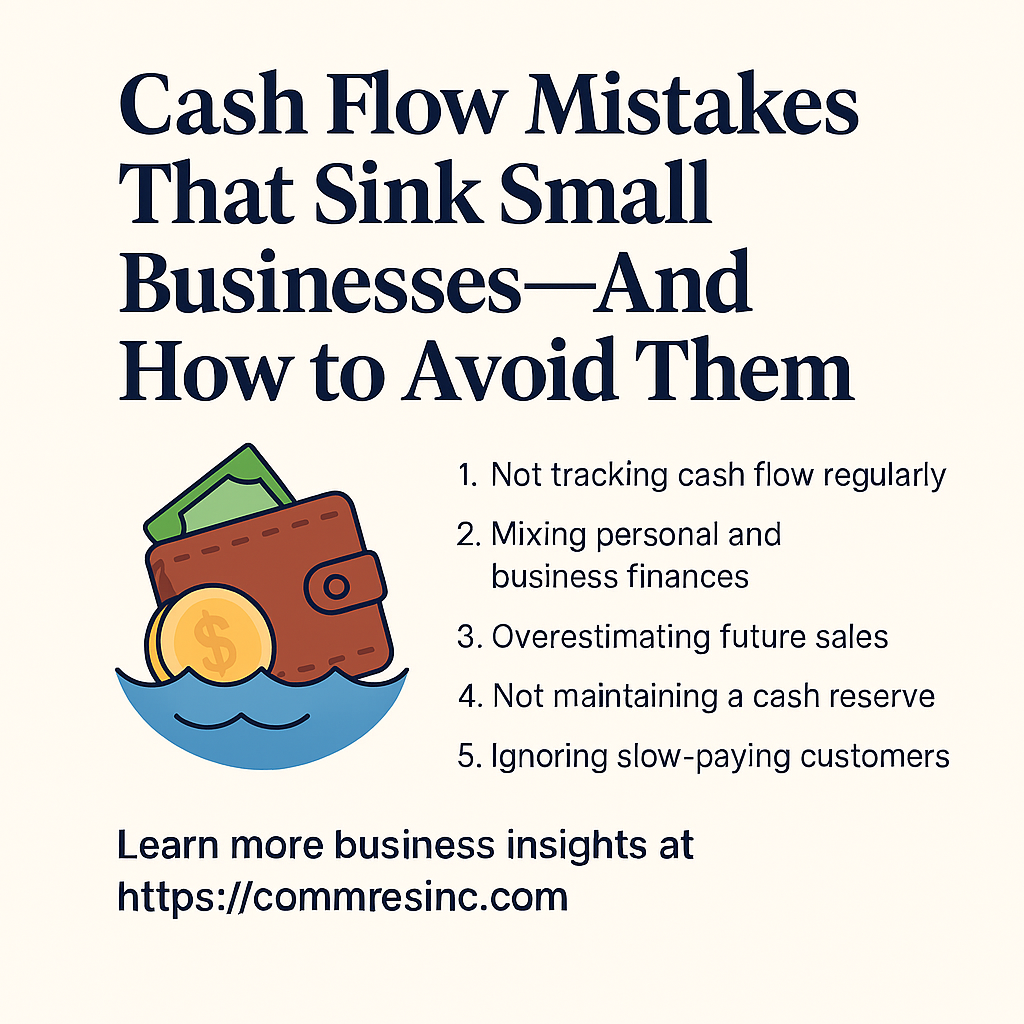
Cash Flow Mistakes That Sink Small Businesses—And How to Avoid Them

Healthy cash flow is the lifeblood of any small business. Even profitable companies can fail if money isn’t moving in and out in a stable, predictable way. Below are the most common cash flow mistakes small business owners make—and how to avoid them so your business stays strong and sustainable.


1. Confusing Profit With Cash Flow

Many business owners assume that because the company is making a profit, cash flow is automatically healthy. But profit is an accounting number—cash flow is real money in the bank.

Why it’s dangerous:
You may appear profitable on paper while struggling to pay bills, payroll, or suppliers.

How to avoid it:

  • Monitor your cash flow statement monthly.
  • Use accounting software that gives real‑time cash insights.
  • Build a 3–6 month cash reserve.

🔗 Need help understanding your cash position? Check out financial tools and resources at https://commresinc.com.


2. Slow or Unpredictable Invoicing

Late invoicing means late payments—and that can cripple your cash cycle.

Why it’s dangerous:
If you delay sending invoices by even a week, you may extend your payment cycle by 30+ days.

How to avoid it:

  • Invoice immediately when work is completed.
  • Automate recurring invoices.
  • Offer early‑payment incentives.

3. Letting Accounts Receivable Grow Out of Control

Outstanding invoices = money you’ve earned but can’t use.

How to avoid it:

  • Enforce clear payment terms (Net 15 or Net 30).
  • Follow up regularly—don’t wait 60+ days.
  • Charge late fees when appropriate.

4. Overspending on Inventory

Too much inventory ties up cash that could be used for growth or emergencies.

How to avoid it:

  • Use sales forecasting to order what you need.
  • Track turnover rates.
  • Negotiate with suppliers for smaller, more frequent shipments.

5. Not Planning for Seasonal Fluctuations

Almost every industry has seasonal highs and lows.

How to avoid it:

  • Review your financial history to identify patterns.
  • Adjust staffing and inventory to match slower months.
  • Save during peak periods to cover lean periods.

6. Relying Too Heavily on One Customer

If one customer makes up more than 30–40% of your revenue, your cash flow is at risk if they slow down or disappear.

How to avoid it:

  • Diversify your customer base.
  • Create multiple revenue streams.
  • Build long‑term contracts when possible.

7. Not Using Cash Flow Forecasting

Forecasting lets you predict shortages before they become emergencies.

How to avoid it:

  • Create a 12‑month cash flow forecast and update it monthly.
  • Stress‑test different scenarios (slow sales, sudden expenses).
  • Review budgets and adjust spending proactively.

🔗 If you’d like expert help designing a smart cash flow system or want business optimization services, visit https://commresinc.com.


8. Operating Without a Line of Credit

A line of credit is a safety net—not a sign of financial weakness.

How to avoid it:

  • Set up a line of credit before you need it.
  • Use it strategically to bridge short‑term gaps.
  • Avoid relying on it for ongoing expenses.

Final Thoughts

Cash flow problems don’t happen overnight—they build slowly through small, avoidable mistakes. By monitoring your finances, invoicing promptly, forecasting ahead, and keeping your expenses aligned with your revenue cycle, you can strengthen your business and prevent crises before they start.

If you’re ready to improve your business operations, explore the services and tools available at https://commresinc.com.

The Power of Small Business: How Local Companies Drive Big Impact

Small businesses are the heartbeat of the American economy. While large corporations often dominate the headlines, it’s the locally owned shops, service providers, contractors, and niche specialists who shape communities, create jobs, and keep local economies moving. For organizations like Commercial Resources Inc., which support businesses through facility services, repairs, and commercial maintenance, understanding the needs and challenges of small business owners is essential.

Below are some valuable insights small business owners can use to stay competitive, strengthen operations, and grow with confidence.


1. Small Businesses Create Real Community Value

Small businesses provide more than just products or services—they offer connection, familiarity, and accessibility. Customers often choose local providers because they value trust and personalized service. For service‑based businesses—like contractors, maintenance teams, and commercial trade professionals—that personal reputation is everything.

Why this matters:

  • Local businesses reinvest money in their own community.
  • They build long‑term relationships with customers and other local companies.
  • Being small makes it easier to pivot quickly, adapt, and innovate.

2. Operational Efficiency Is a Superpower

In a small business, every dollar matters. Improving operational efficiency doesn’t require enterprise‑level tools—it starts with tightening processes and partnering with reliable vendors.

Ways businesses can improve efficiency:

  • Streamline scheduling and maintenance with digital tools.
  • Outsource specialized work instead of taking on extra overhead.
  • Build relationships with trusted commercial service providers for faster response times.

Companies like Commercial Resources Inc. help small businesses stay focused on what they do best by handling complex facility or property needs in the background.


3. Preventive Maintenance Saves Time and Money

Many small businesses operate reactively—waiting for something to go wrong before fixing it. But preventive maintenance can significantly reduce downtime and emergency repair costs.

Key advantages of staying proactive:

  • Fewer unexpected disruptions
  • Longer lifespan for equipment and facilities
  • Better budgeting with predictable maintenance costs

For example, a small retail shop that schedules routine electrical, plumbing, and HVAC checks will spend far less than one who waits for breakdowns.


4. Technology Levels the Playing Field

Small businesses don’t need huge budgets to use technology to their advantage. Even simple digital tools can help owners run more efficiently.

Examples include:

  • Online booking systems
  • Automated invoicing
  • Inventory alerts
  • Customer communication platforms

These tools allow small businesses to compete with larger organizations by offering convenient, reliable, modern service.


5. Strong Vendor Partnerships Can Fuel Growth

Many small businesses grow faster when they collaborate with trusted service partners instead of trying to manage everything internally.

The right partner can:

  • Reduce costs
  • Improve service quality
  • Provide expertise that small teams may not have in-house
  • Support expansion by handling facilities and operational needs

Whether you’re running a restaurant, small office, retail space, or service company, a dependable commercial services partner keeps operations running smoothly so you can focus on your customers.