Cash Flow 101: What Every Small Business Owner Must Understand

Managing cash flow is one of the most essential skills for any small business owner. Even profitable businesses can struggle — or fail — if cash isn’t flowing in at the right time. Understanding how money moves in and out of your business gives you the power to plan, grow, and stay resilient during slow seasons or unexpected expenses.
What Is Cash Flow?
Cash flow is the movement of money into (inflows) and out of (outflows) your business.
- Positive cash flow means more money is coming in than going out — ideal for stability and growth.
- Negative cash flow means you have more expenses than revenue during a given period — a warning sign that requires quick action.
Even if revenue looks strong on paper, delayed payments, rising expenses, or seasonal demand can leave your bank account depleted.
Why Cash Flow Matters More Than Profit
You can be profitable without being cash‑flow positive.
For example:
You might land a big contract, but if the customer doesn’t pay for 60 days and you need to cover payroll tomorrow, you have a cash flow problem — not a profitability problem.
Cash flow directly affects your ability to:
- Pay employees and vendors
- Cover rent, utilities, and supplies
- Invest in equipment or marketing
- Take advantage of growth opportunities
- Weather slow months without panic
Profit is long‑term.
Cash flow is day‑to‑day survival.
The Three Types of Cash Flow
Understanding where your cash comes from helps identify strengths and risks.
1. Operating Cash Flow
Everyday business activities: sales, services, vendor payments, wages, taxes.
2. Investing Cash Flow
Buying or selling long‑term assets: equipment, vehicles, property.
3. Financing Cash Flow
Loans, credit lines, owner investments, or dividend payouts.
Operating cash flow is the heartbeat of your business. If it’s consistently negative, something fundamental must change.
How to Improve Your Cash Flow
Here are practical steps you can implement immediately:
1. Speed Up Your Inflows
- Invoice promptly and clearly
- Offer early‑payment incentives
- Accept multiple payment methods
- Require deposits or partial payments for large projects
2. Slow Down Your Outflows
- Negotiate better terms with vendors
- Schedule payments closer to due dates
- Reduce unnecessary recurring expenses
3. Monitor Your Cash Flow Weekly
Weekly reviews prevent surprises. Look for patterns:
- Which months are slow?
- Which expenses keep creeping up?
- Are customers paying later than before?
4. Build a Cash Cushion
Aim for at least 1–3 months of operating expenses in reserve.
This buffer protects you from late payments or seasonal dips.
5. Use a Cash Flow Forecast
Project your cash position 30, 60, and 90 days ahead.
This helps you anticipate shortages before they hit.
Common Cash Flow Mistakes (and How to Avoid Them)
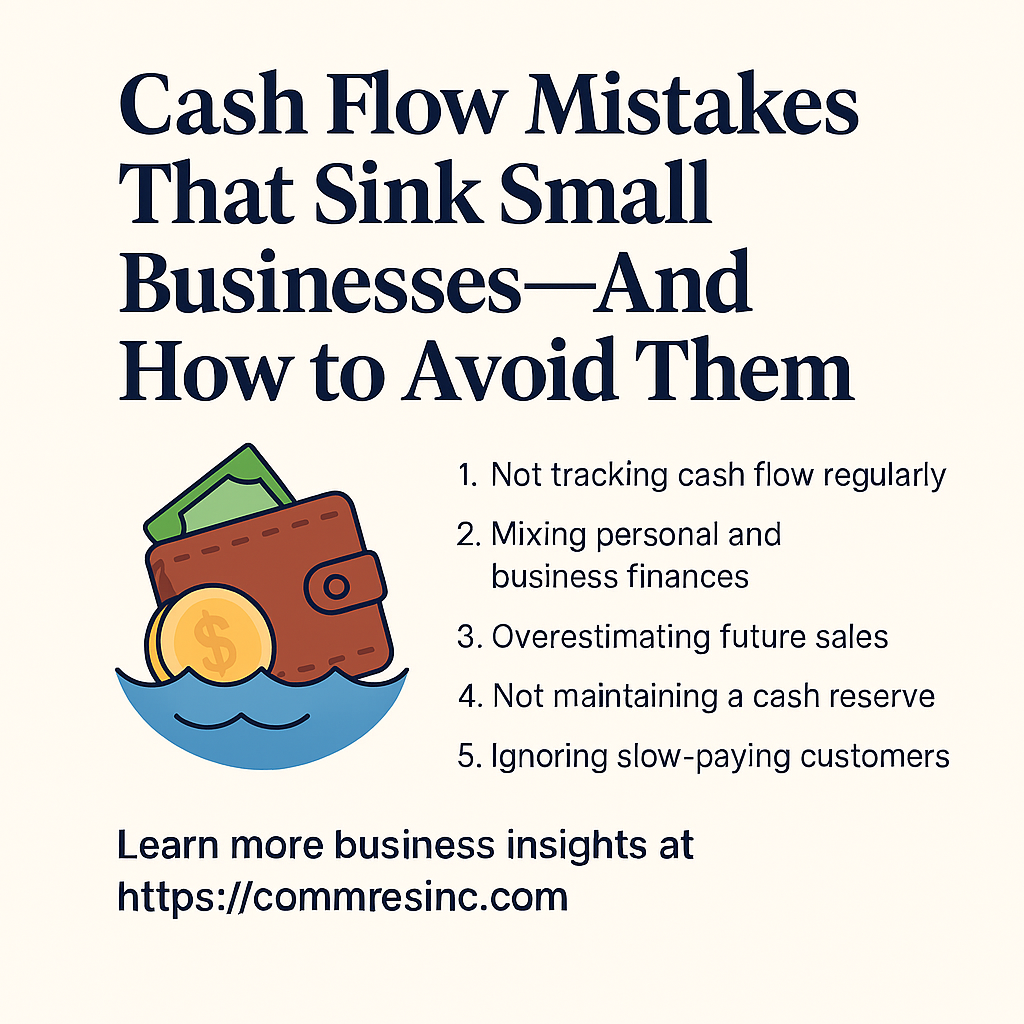
❌ Counting sales before cash arrives
✔ Track real deposits — not promised payments.
❌ Not budgeting for taxes
✔ Create a tax savings account and set aside a percentage of every sale.
❌ Over‑ordering inventory
✔ Keep inventory levels aligned with real demand.
❌ Ignoring rising expenses
✔ Audit subscriptions, service fees, and supply costs quarterly.
❌ Not separating personal and business finances
✔ Use separate accounts so cash flow is easy to track and analyze.
Tools That Help You Track Cash Flow
- Accounting software with dashboards (QuickBooks, Xero, Wave)
- Cash flow forecasting apps
- Business banking accounts with built‑in analytics
- Simple spreadsheets for weekly check‑ins
The tool matters less than consistency.
Final Thoughts
Mastering cash flow isn’t just good financial practice — it’s a competitive advantage. Businesses that understand and monitor cash flow run more smoothly, make better decisions, and stay strong even during unpredictable times.
Whether you’re brand new or growing fast, cash flow is the foundation. When you manage it well, everything else becomes easier.