
The Recent Mortgage Rate Drop & What It Means for Commercial Real Estate Buyers

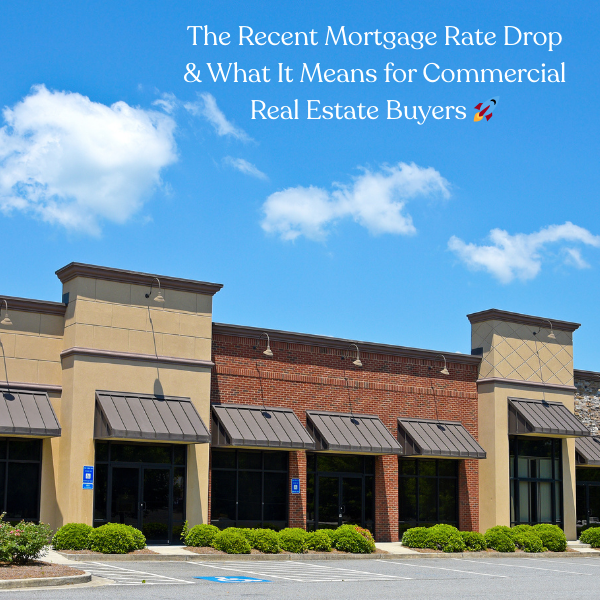
1. A Stunning Dip in Mortgage Rates
In early January 2026, mortgage rates hit their lowest point in nearly three years. The average rate for a 30-year fixed mortgage fell to around 6.0%, down from the mid-6% range seen throughout most of 2025. [cnbc.com], [money.usnews.com]
Experts highlight that a $200 billion bond-buying initiative by Fannie Mae and Freddie Mac significantly drove this decline—projecting a drop of between 25 and 50 basis points. [cnbc.com], [zillow.com], [finance.yahoo.com]
2. Why the Drop Matters for Commercial Buyers
The impact on CRE (Commercial Real Estate) is more immediate and pronounced than in residential markets:
- Cheaper Debt Service: A slight rate cut can result in substantial savings. For instance, a $50 million loan on an office building could reduce annual debt service by $350,000 to $500,000.
- Refinancing Relief: With many CRE loans maturing in the coming years, the current rate environment offers a timely chance to refinance at lower costs—boosting debt service coverage ratios and rejuvenating stalled portfolios.
- Increased Lending & Transactions: Lower rates encourage lenders to offer more capital, and buyers find new acquisitions more financially viable. Several sectors, like multifamily, are already seeing renewed interest.
3. What the Market is Saying
- A September 2025 rate cut by the Fed lowered the federal funds rate by 25 bps, which, when reflected in Treasury yields, directly benefited CRE loans.
- Firms like Cushman & Wakefield, Keystones, and JP Morgan underscore that lower Treasury yields, which CRE mortgages are benchmarked on, encourage lenders to compress spreads. This supports cap-rate compression and enhances property values.
- While cautious voices note potential headwinds—such as sticky long-term yields—most analysts agree the immediate effect is positive for buyers and refinancers.
4. How This Benefits Commercial Real Estate Buyers
- Spend Less on Financing:
Lower interest rates cut monthly debt payments and enhance net operating income (NOI)—redesigning property-level returns favorably. Example: Reducing annual loan costs by $5,000 boosts NOI directly. - Lock in Refinance Opportunities:
Many CRE loans mature in the next 1–3 years. This window lets owners refinance at current rates, reducing financing costs and freeing up capital. - Boost in Deal Flow:
Lower borrowing costs entice more buyers and lenders, restarting activity in deals that were previously unprofitable. Multifamily assets are leading this resurgence. - Cap Rate Compression:
As financing becomes cheaper, buyers are willing to pay more for stable income properties, narrowing the yield spread and raising commercial property prices. - Sector-Specific Gains:
- Multifamily: Renewed lending, refinancing options, and high demand position it to thrive further.
- Office & Retail: Those under pressure may stabilize as refinancing eases and lower rates improve property performance.
5. What Buyers Should Do Now
- Act Quickly on Financing: If refinancing or acquiring property, capture current rates before any reversal.
- Assess Debt Maturities: CRE owners with loans maturing soon should analyze the benefits of refinancing at these lower rates.
- Reevaluate Deals: Adjust underwriting assumptions to reflect reduced debt costs and improved yields—projects paused last year may now be viable.
- Seek Expert Advice: Speak with lenders and advisors to lock in favorable terms using current Treasury benchmarks.
- Monitor Yields Closely: While rates may stay low or dip slightly, Treasury yields could edge up—staying informed is key.
This recent drop in mortgage rates represents a strategic opportunity for commercial real estate buyers and owners—offering immediate savings, refinancing advantages, refreshed deal pipelines, and improved valuations. Acting now could yield outsized financial gains in this pivotal rate environment.